

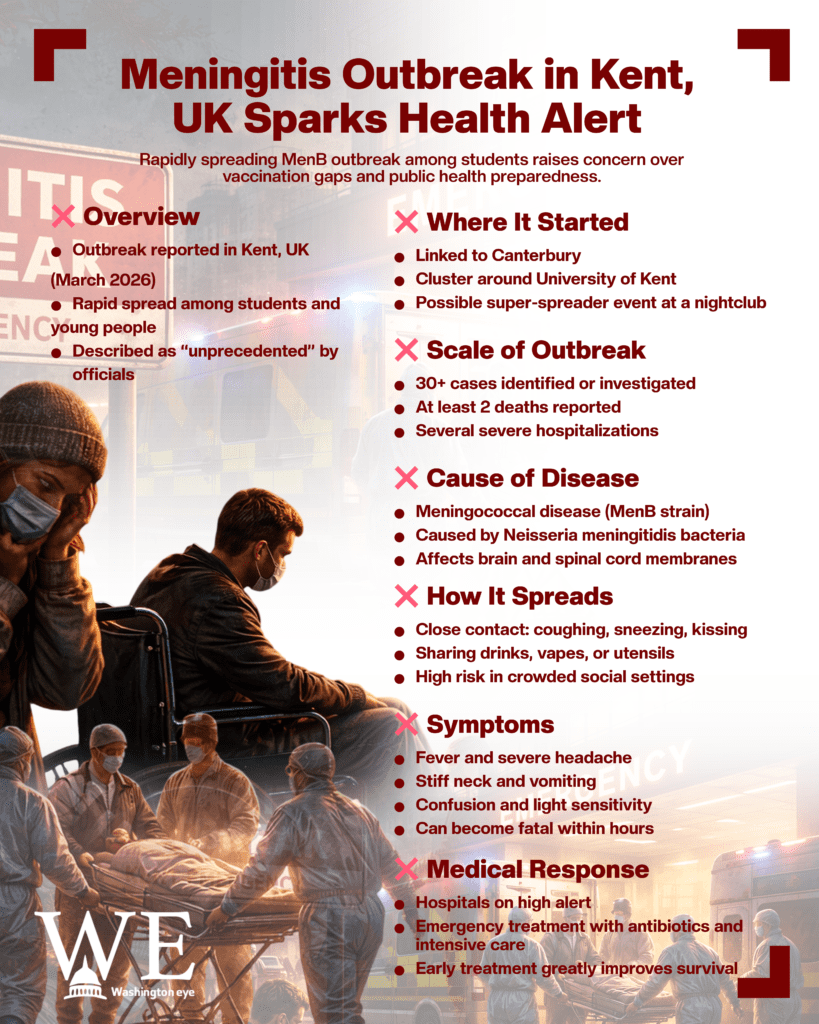
A rapidly spreading outbreak of meningitis has gripped Kent in southeast England, raising alarm among health authorities, universities, and families as cases continue to rise in March 2026. The outbreak, first detected around March 12–15 in Canterbury, has been described by officials as “unprecedented” due to its speed and concentration among young people, particularly students.
The outbreak is primarily linked to Canterbury and the University of Kent, with additional cases reported in several schools across the county and even a related case in London. Health investigators believe the infection may have originated from a “super-spreader” event at a nightclub, Club Chemistry, between March 5 and 7, where large numbers of students gathered in close proximity.
According to the latest reports, more than 30 cases have been identified or investigated, including confirmed and suspected infections, while at least two young people, a university student and a school pupil, have died. Several others have required hospital treatment, with some cases becoming severe due to the rapid progression of the disease.
Cause and nature of the disease
Health authorities have confirmed that the outbreak involves meningococcal disease, particularly the MenB (meningitis B) strain, caused by the bacterium Neisseria meningitidis. This infection affects the protective membranes of the brain and spinal cord and can lead to life-threatening complications such as blood poisoning (septicaemia).

Meningitis spreads through close personal contact, including coughing, sneezing, kissing, or sharing items such as drinks or vapes, factors that contributed to its rapid spread among students. Symptoms can escalate quickly and include fever, severe headache, stiff neck, vomiting, confusion, and sensitivity to light, making early detection critical for survival.
Hospitals and treatment response
Hospitals across Kent and nearby areas have been placed on high alert. Dozens of patients have been admitted, with emergency treatment involving rapid administration of antibiotics, intravenous fluids, and intensive care support in severe cases. Medical experts stress that meningitis can become fatal within hours if untreated, but early antibiotic intervention significantly improves survival rates.

Vaccination and public health response
In response to the outbreak, the UK Health Security Agency (UKHSA) and the National Health Service (NHS) have launched an extensive containment strategy. This includes:
- Mass vaccination campaigns, particularly targeting university students and those exposed
- Distribution of thousands of antibiotic doses as a preventive measure
- Expansion of eligibility for the MenB vaccine to high-risk groups
More than 4,500 vaccinations and over 10,000 antibiotic doses have already been administered as part of emergency measures. However, officials have raised concerns about low vaccination coverage in recent years, with declining uptake of meningitis vaccines among teenagers leaving many vulnerable to infection.
Impact on society and institutions
The outbreak has had a visible impact on daily life in Kent. Universities and schools have issued health alerts, cancelled some in-person activities, and advised students to monitor symptoms closely. In Canterbury, businesses reported reduced footfall as fear spread among residents, with some describing the situation as reminiscent of pandemic-era precautions. Authorities also warned that students returning home during holidays could spread the infection beyond Kent, raising the risk of clusters elsewhere in the UK.
Government response and future concerns
The UK government has acknowledged the seriousness of the situation, with Health Secretary Wes Streeting announcing expanded vaccination access and urging vigilance. Officials say it is too early to declare the outbreak contained, as the disease has an incubation period of up to 10 days, meaning more cases may emerge.
Public health experts are now reviewing whether existing guidelines, particularly the definition of “close contacts”, are sufficient for managing outbreaks of this scale. There are also growing calls to expand routine access to the MenB vaccine for older age groups. Despite the seriousness of the outbreak, European health authorities currently assess the overall risk to the wider public as low, provided prompt measures continue and awareness remains high.
Conclusion
The Kent meningitis outbreak serves as a stark reminder of how quickly infectious diseases can spread in close-knit communities and the importance of vaccination, early detection, and coordinated public health action. As authorities continue to monitor the situation, the focus remains on containing transmission, protecting vulnerable groups, and preventing further loss of life.