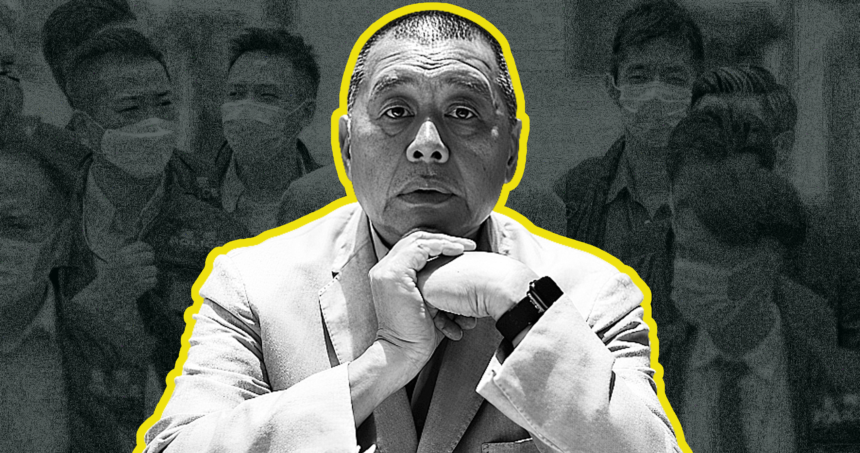
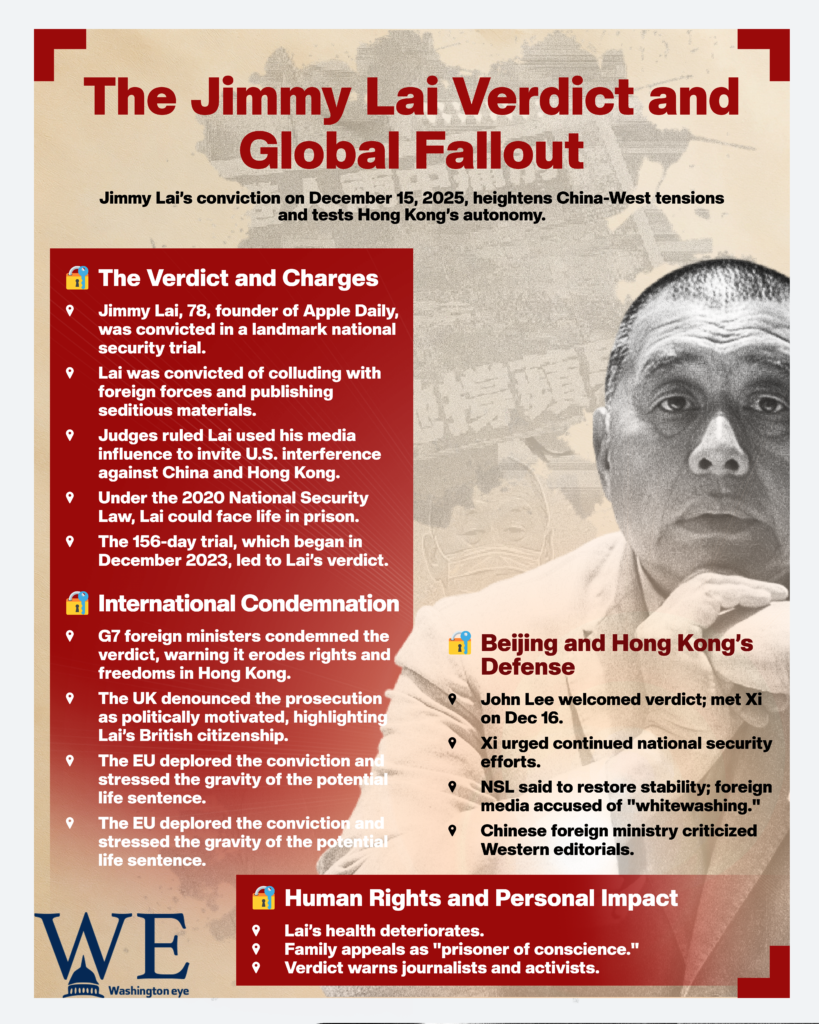
Hong Kong’s High Court verdict against jailed media tycoon and pro-democracy activist Jimmy Lai has escalated an already raw diplomatic fight between Beijing and Western governments, with officials and rights groups warning the case is becoming a defining test of press freedom, judicial independence, and Hong Kong’s “one country, two systems” promise. Lai, 78, the founder of the now-shuttered pro-democracy tabloid Apple Daily, was found guilty on December 15, 2025 in a landmark national security trial that has drawn international attention for years.
The case centres on allegations that Lai and associates conspired to collude with foreign forces and to publish seditious materials, charges that carry potentially severe penalties, including life imprisonment for foreign-collusion offences under Hong Kong’s sweeping National Security Law (NSL) imposed by Beijing in 2020. The ruling followed an unusually long and closely watched process: Reuters described the proceedings as a 156-day trial that began in December 2023, while the Associated Press reported judges reading from an extensive written decision as the court detailed its reasoning.
According to reporting on the judgment, the court accepted prosecutors’ argument that Lai used his media influence and political connections to invite external pressure, particularly from the United States against Beijing and Hong Kong authorities. The AP said the judges found Lai had extended what one judge called a “constant invitation” to the U.S. to act against China under the banner of helping Hong Kongers, while the defence has argued that public advocacy and commentary were being criminalised as national security threats.
To Lai’s supporters, the verdict is less about evidence than about example: a warning shot to journalists, activists, and anyone who believes Hong Kong’s courts can remain insulated from the mainland’s political priorities. Apple Daily, once one of the city’s most influential outlets, closed after arrests and asset freezes, and Lai has been in custody since 2020. The Guardian and other outlets have framed the conviction as a milestone in Hong Kong’s post-2019 crackdown, where dissent is increasingly treated as subversion.

The diplomatic aftershocks were immediate. G7 foreign ministers issued a joint statement condemning the prosecution and guilty verdict, warning of deteriorating rights and freedoms in Hong Kong. The European Union also deplored the conviction, explicitly noting that Lai who holds British citizenship was found guilty on national security grounds and could face a life sentence. The UK has publicly condemned what it calls a politically motivated prosecution, and the case has become a recurring flashpoint in London–Beijing relations.
Hong Kong and Beijing, however, have pushed back hard on foreign criticism, portraying it as interference and “whitewashing” criminal conduct. Hong Kong Chief Executive John Lee welcomed the verdict and later revealed he raised Lai’s conviction in a meeting with President Xi Jinping in Beijing on December 16, saying Xi encouraged continued efforts to safeguard national security. Lee also accused foreign media of misrepresenting the case.
Beijing’s messaging has been unusually direct toward the international press. The foreign ministry’s office in Hong Kong urged journalists not to be “misled” and criticised major Western outlets’ editorials, including letters sent to The Washington Post and The Wall Street Journal, according to the South China Morning Post’s reporting. The posture underscores how the case is no longer only a courtroom matter but a global narrative contest over Hong Kong’s status and China’s influence.
For Lai’s family, the verdict is also intensely personal about time, health, and survival. Reports have highlighted concerns about his deteriorating condition after years in custody and periods of solitary confinement. His relatives have used the international spotlight to plead for intervention, framing him as a prisoner of conscience whose fate reflects the wider collapse of freedoms in the city. Reuters’ roundup of reactions included statements from his family urging continued pressure for his release, while commentary in major Western outlets has echoed those concerns.
The broader impact is likely to be felt across diplomacy, business confidence, and Hong Kong’s international identity. Western governments already uneasy about the NSL now face domestic pressure to move beyond statements through sanctions, visa pathways, or other diplomatic measures while Beijing insists the law restores stability after the 2019 unrest. With each new development, the Lai case is hardening into a symbol: to Beijing, a national security enforcement; to many Western capitals, a sign that Hong Kong’s promised autonomy and open press have been fundamentally reshaped.