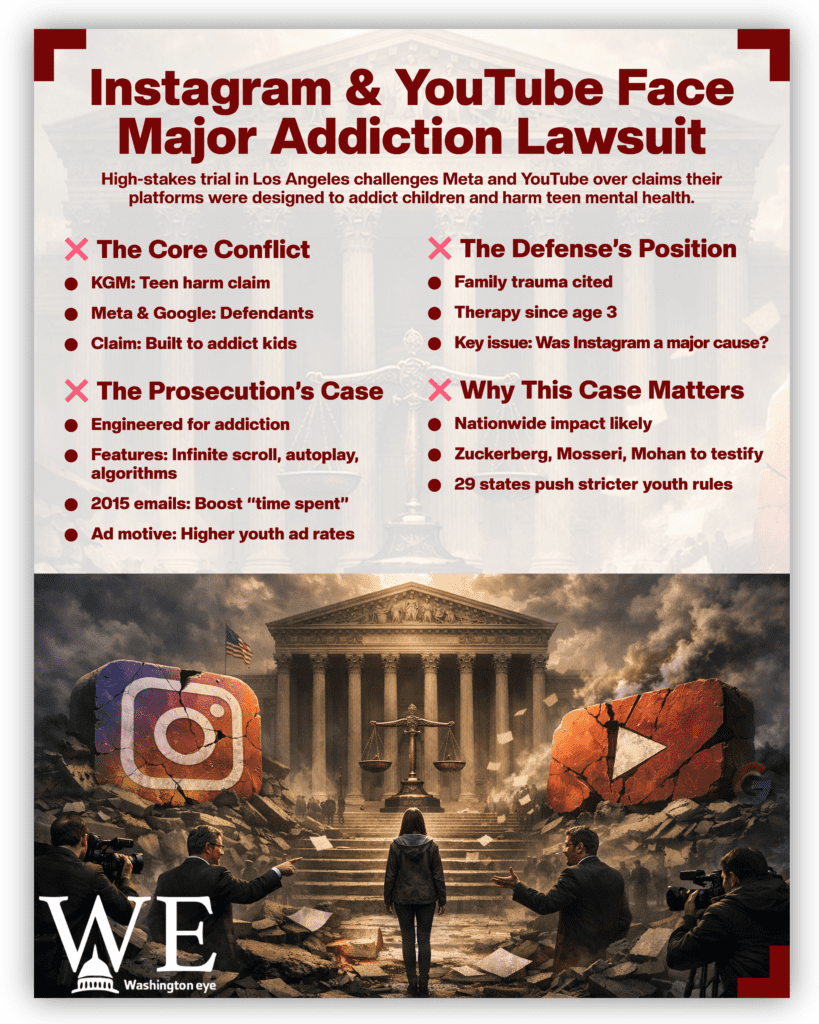

A closely watched trial has begun in California that could reshape how courts view the mental health impact of social media platforms on children. In Los Angeles Superior Court, attorneys for a plaintiff identified as “KGM” argue that Instagram and YouTube were deliberately engineered to function as what they describe as “addiction machines,” contributing to severe psychological harm during her teenage years.
In his opening statement, attorney Mark Lanier accused Meta and YouTube of intentionally designing products to capture and hold the attention of young users. Displaying children’s alphabet blocks spelling out “Addicting,” “Brains,” and “Children,” Lanier told jurors the case centers on whether two of the wealthiest corporations in history knowingly built systems to exploit developing minds. He pointed to internal communications, including a 2015 email in which Meta CEO Mark Zuckerberg referenced increasing “time spent” on the platform to meet business targets. Lanier also alleged that YouTube targeted young users because advertisers pay higher rates for their engagement compared to YouTube Kids.
The plaintiff, referred to by her initials because the alleged harm occurred when she was a minor, claims her mental health struggles were worsened by compulsive social media use. Lanier argued the companies failed to adequately warn families about risks tied to platform design, including features such as autoplay, algorithmic recommendations, and endless scrolling.
Defense attorneys for Meta and YouTube countered that KGM’s psychological challenges stemmed from personal and family circumstances rather than platform design. Meta attorney Paul Schmidt described a childhood marked by family turmoil, domestic violence, and long-term therapy beginning at age three. He told jurors the central question is whether Instagram was a substantial factor in her distress.
The six-week trial is expected to feature testimony from Zuckerberg, Instagram head Adam Mosseri, and YouTube CEO Neal Mohan, as well as former Meta employees who have spoken publicly about concerns over youth engagement practices. The case is seen as a bellwether for thousands of similar lawsuits nationwide.
Meanwhile, 29 state attorneys general are pursuing separate action against Meta, seeking sweeping changes including removing accounts of users under 13, deleting data collected from minors, restricting addictive features, and limiting use during school hours. Although Meta has introduced “teen account” safeguards, state officials argue these measures fall short.