
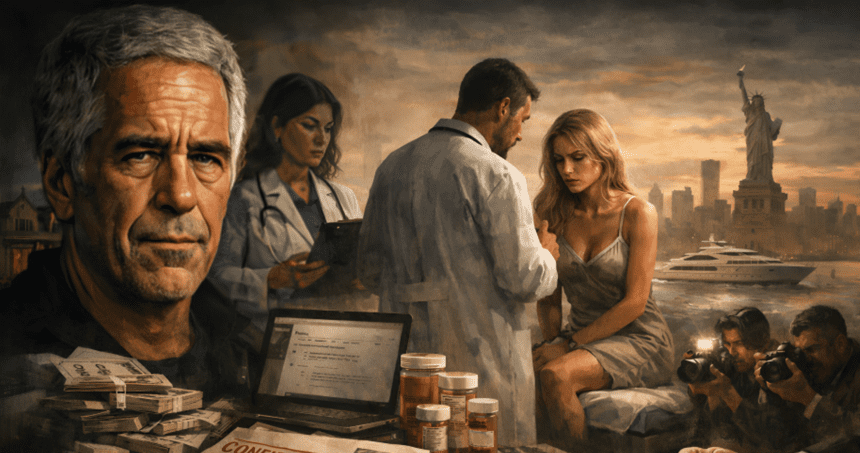
The late American financier Jeffrey Epstein is once again at the center of global attention after newly released documents shed light on the role of medical professionals in his abuse network. Investigations into Epstein’s activities have revealed that several doctors and medical institutions had connections to him, raising troubling questions about how medicine was allegedly used to maintain control over women and girls linked to his operation.
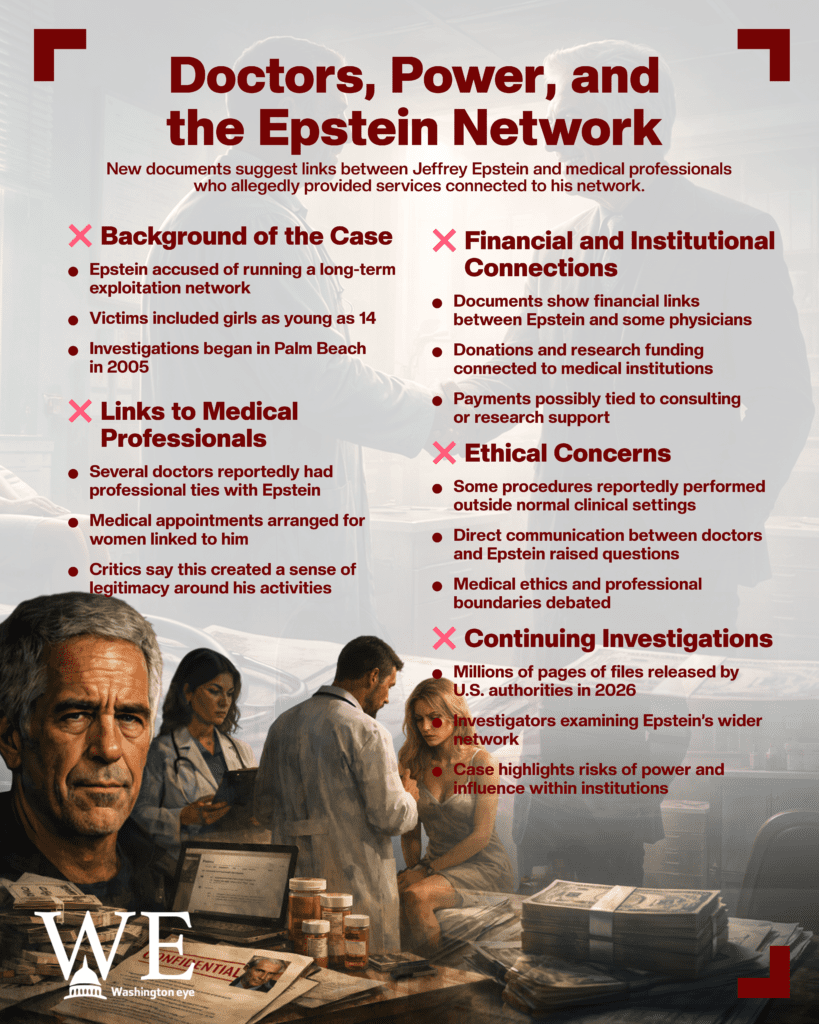
Epstein, born in 1953, built a fortune managing wealth for billionaires and cultivating connections with powerful political, business, and social figures. Behind that powerful network, prosecutors say he ran a long-standing system of sexual exploitation that involved recruiting young women, many of them teenagers, to his homes in New York, Florida, New Mexico, and the U.S. Virgin Islands. His crimes first came under police scrutiny in 2005 when authorities in Palm Beach, Florida began investigating allegations that Epstein had paid underage girls for sexual acts at his mansion. Interviews with victims and witnesses revealed that many of the girls involved were as young as 14 years old.
Over the years, Epstein’s wealth and influence enabled him to maintain a wide network of associates, including medical professionals who sometimes provided care for him or women around him. Recent document releases under the Epstein files transparency process have revealed emails, financial records and communications suggesting close relationships between Epstein and several doctors at prominent institutions.

Investigators say Epstein used these relationships in several ways. In some cases, doctors were allegedly asked to provide medical treatment to women associated with him. Reports indicate that women were sent to gynecologists and other specialists, often arranged through Epstein’s contacts, which critics argue helped maintain a sense of control over their health and personal lives. Some survivors and analysts say the presence of doctors created an appearance of legitimacy and safety, which helped Epstein maintain influence over vulnerable women.
Documents released by U.S. authorities also revealed financial ties between Epstein and certain physicians. In one case, an obstetrician-gynecologist linked to a major American medical center reportedly received payments from companies connected to Epstein in the early 2000s. Investigators are examining whether those payments were linked to consulting work, research support or other professional relationships.
Further revelations from the files describe how Epstein used donations and gifts to maintain ties with medical professionals. Reports say he funded research projects, made charitable contributions and offered financial support to doctors and hospitals. In some instances, doctors reportedly performed medical procedures for women associated with Epstein outside traditional clinical settings, raising questions about ethical boundaries.
One controversial example highlighted in the files involves referrals and treatment arrangements facilitated by doctors connected to Epstein’s social network. Emails and records indicate that physicians sometimes communicated directly with Epstein about appointments, treatments or health concerns involving women around him. Critics argue this blurred professional boundaries and may have enabled Epstein to maintain a system in which medical care became another mechanism of control.

The role of doctors in the scandal has sparked a wider debate within the medical community about ethics and accountability. Public health scholars and physicians say the case demonstrates how professional authority can be misused when doctors fail to question the circumstances surrounding vulnerable patients. Some experts argue that physicians who interacted with Epstein had a responsibility to identify warning signs and protect potential victims.
The controversy has intensified following the release of millions of pages of documents by the U.S. Department of Justice in 2026. These files include emails, photographs and financial records related to Epstein’s network, providing investigators and journalists with new insight into how his operation functioned and who may have been connected to it.
Epstein died in a New York jail in 2019 while awaiting trial on federal sex-trafficking charges, officially ruled a suicide. However, investigations into his network continue, particularly concerning associates who may have enabled or benefited from his activities. For survivors and advocacy groups, the emerging details highlight the complexity of Epstein’s operation. They argue that his influence extended beyond wealthy friends and powerful institutions into professional networks that helped sustain his control.
As more information becomes public, investigators hope the revelations will provide a clearer understanding of how such abuse persisted for years and what safeguards are needed to prevent similar cases in the future. The Epstein scandal remains one of the most disturbing examples of how power, money and influence can intersect with professional systems, raising difficult questions about accountability not only for individuals directly involved but also for institutions that failed to stop the abuse.