In a defining address delivered at the European Parliament in Strasbourg, the President of the United Nations General Assembly articulated a compelling vision for the survival of global cooperation. The speech emphasized that the relationship between the United Nations and Europe has reached a critical juncture where mutual support is no longer a matter of policy but of existential necessity. This appeal arrives at a moment when the frameworks designed to maintain global stability are facing unprecedented challenges from both internal systemic failures and external political pressures.
The Erosion of International Norms and the Rise of Defiance
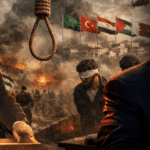
The current state of global affairs suggests a transition from a world of manageable tension to one of active hostility toward established norms. According to the United Nations (2026), the Assembly President observed that the international order is no longer merely under pressure but is under direct attack. This distinction is significant because it implies that modern conflicts are increasingly waged in open defiance of international law rather than under the traditional pretenses of self defense. The emergence of crises in regions such as Venezuela, Iran, and Greenland, alongside the persistent devastation in Ukraine and Gaza, illustrates a fragmenting landscape where the rules of engagement are being discarded. The implication is clear: without a robust defense of the UN Charter, the world risks returning to a state where power alone dictates the outcome of disputes.
Defending the Truth as A Foundation for Diplomacy
A primary focus of the address was the urgent need to protect the integrity of information. In an era where misinformation and falsities are widespread, the ability of nations to negotiate is compromised when basic facts are no longer agreed upon. The Assembly President argued that defending the truth is a prerequisite for effective multilateralism, especially when nations face economic coercion or threats intended to influence their diplomatic positions. The United Nations (2026) report highlights that Europe has previously demonstrated the power of unity, particularly when the European Union collectively implemented massive sanctions in response to the invasion of Ukraine. This historical precedent serves as a model for how a cross regional alliance can protect the international rules based system against those who would weaponize disinformation to undermine collective security.
Financial Accountability and the Path to Institutional Renewal
The institutional health of the United Nations is currently threatened by a severe liquidity crisis caused by the failure of certain Member States to pay their assessed contributions. This financial instability is compounded by what the President described as Kafkaesque financial rules that require the reimbursement of funds that were never actually received. To lead by example, the European Union is urged to ensure its dues are paid in full and on time while advocating for a total overhaul of these inefficient systems. Furthermore, as the organization approaches the selection of its next leader, there is a growing call to address the historical absence of women in the highest office. It is noted by the United Nations (2026) that in eighty years, a woman has never served as Secretary General, a statistic that stands in stark contrast to the four billion potential female candidates worldwide.
A Final Note
The survival of the United Nations depends on the willingness of regional powers to champion its core principles during periods of global retreat. While the organization remains imperfect, these flaws should be viewed as opportunities for refinement rather than reasons for abandonment. The path forward requires a renewed commitment to the Charter to ensure that the parliament of humanity can continue to function as a shield for the vulnerable and a forum for peace.