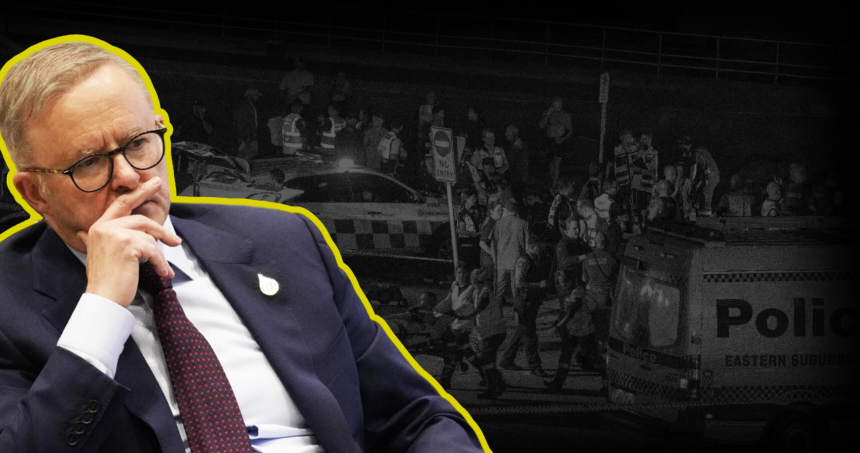
On the evening of 14 December 2025, one of the most tranquil and iconic Australian locales transformed into a scene of terror when gunfire erupted at Bondi Beach, a world-famous stretch of sand and sea in Sydney’s eastern suburbs. The late-afternoon mass shooting, which occurred near Archer Park beside the Bondi Pavilion, left at least 15 people dead and more than 40 injured, authorities confirmed, as the nation and world grapple with the aftermath of an attack labelled both a terrorist incident and a targeted act of antisemitism.
The incident unfolded at approximately 6:47 p.m. local time, during a Hanukkah celebration called “Chanukah by the Sea” organized by the Jewish community group Chabad of Bondi. Close to 1,000 people had gathered at the event’s grassy area just off the beach to mark the first night of the Festival of Lights when shots rang out, plunging the festive atmosphere into chaos and panic.
Eyewitnesses described screams and confusion as the gunmen, later identified as a father and son duo, opened fire from an elevated footbridge over the crowded celebration. Some initially mistook the sounds of gunfire for fireworks before realising the gravity of the situation. Many in the crowd fled toward the water, sought shelter in nearby restaurants, or dove behind tables and beach umbrellas to avoid the hail of bullets.
Police and emergency services were rapidly dispatched to the scene, with dozens of New South Wales Police vehicles, ambulances, and rescue helicopters converging on the beach. As the carnage unfolded, first responders attempted to evacuate the wounded and secure the area amid the ongoing threat.
Among the most dramatic and widely shared footage from the incident was that of a bystander tackling one of the gunmen, wresting a rifle away and potentially saving many lives before being seriously injured in the effort. The man, identified in multiple reports as Ahmed al-Ahmed, was later hospitalised after suffering gunshot wounds while aiding others. His intervention has been widely hailed by officials and civilian observers alike.
Authorities confirmed that the dead ranged in age from children to elderly adults, with victims including a 10-year-old girl, a Rabbi, and at least one Holocaust survivor among the dead. The injured were transported to multiple hospitals across Sydney, with at least 27 still in care the following day, including several in critical condition.
Prime Minister Anthony Albanese condemned the massacre as “pure evil” and explicitly denounced it as an attack targeting Jewish Australians on a sacred holiday. In televised comments, he stressed national unity and grief while underscoring the need for collective resolve in the face of hatred and violence.

New South Wales Police Commissioner Mal Lanyon and national security officials identified the suspects as 50-year-old Sajid Akram and his 24-year-old son, Naveed Akram, both of whom allegedly used licensed firearms during the attack. Police shot and killed Sajid at the scene, while his son was critically wounded and taken into custody under guard. Investigators later found six registered firearms belonging to the father, including rifles and shotguns, and also two improvised explosive devices that failed to detonate.
Authorities have publicly acknowledged that the younger Akram had been investigated by Australia’s domestic security service, the Australian Security Intelligence Organisation (ASIO), several years earlier over alleged associations with an extremist cell, but no ongoing threat was identified at that time. While police have not yet disclosed a full motive, senior officials and world leaders alike have described the attack as antisemitic terrorism.
Investigations into the planning and motivations of the pair are ongoing. The Australian government has pledged to pursue tougher gun legislation, citing the shooters’ use of legally held weapons despite Australia’s historically strict firearms regulations. Proposals include tighter licensing requirements, limits on the number and type of firearms an individual may own, and the accelerated creation of a national firearms register.
The tragedy has also sparked vigils and mourning both across Australia and internationally, with world leaders offering condolences and affirming solidarity with the Jewish community. Jewish community leaders in Sydney have spoken of the attack’s deep psychological and cultural impact, emphasising the need for stronger protections against hate-fuelled violence.
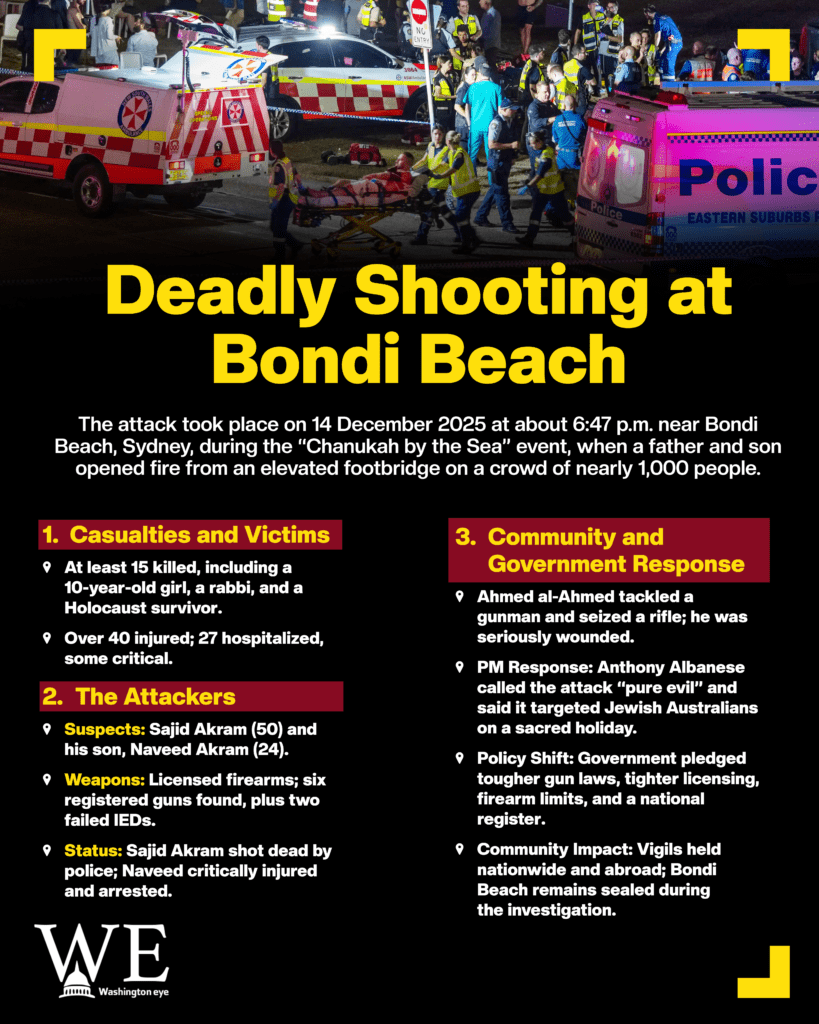
Bondi Beach, renowned as a symbol of Australian leisure and multicultural harmony, remains cordoned off in the aftermath, both as authorities continue their investigation and as the community begins the slow process of healing.