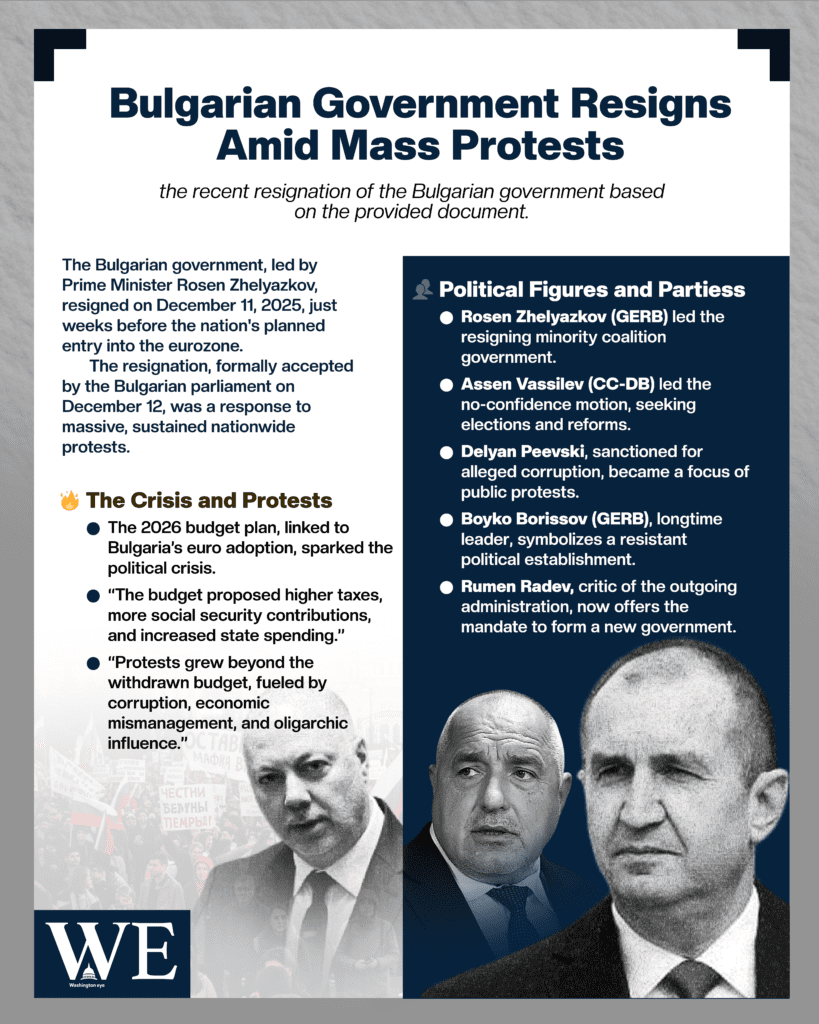
In a dramatic turn of events that has shaken the Balkan nation just weeks before its planned entry into the eurozone, the Bulgarian government led by Prime Minister Rosen Zhelyazkov resigned on December 11, 2025, after sustained and massive nationwide protests against perceived corruption, unpopular economic measures and political stagnation. The decision was formally accepted by the Bulgarian parliament on Friday, December 12, with all 227 lawmakers present voting to approve the resignation, effectively dissolving Zhelyazkov’s coalition government.
The crisis was triggered by a controversial 2026 budget plan, drafted in anticipation of Bulgaria’s adoption of the euro on January 1, 2026, which proposed higher taxes, increased social security contributions and expanded state spending. When tens of thousands of Bulgarians took to the streets beginning in late November, the government initially withdrew the budget. But wider frustrations over widespread corruption, economic mismanagement and political influence by powerful oligarchs deepened, turning a fiscal dispute into a full-blown political confrontation.
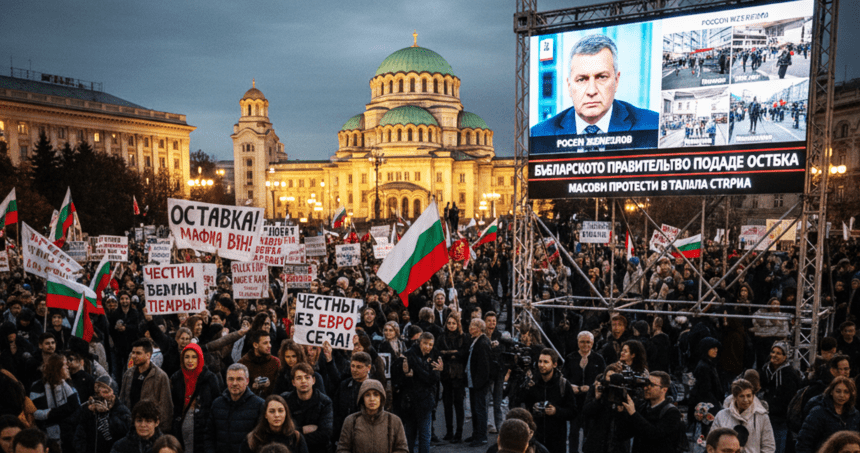
On the evening before the resignation announcement, rallies drew crowds estimated between 100,000 and 150,000 across the capital Sofia and other major cities, including Plovdiv, Varna and Burgas. Protesters, a diverse mix of students, workers, families and urban professionals, marched under slogans demanding “Resignation,” “Mafia Out,” and “Fair Elections,” decrying entrenched corruption in the political class and a failure to deliver meaningful reform.
Prime Minister Rosen Zhelyazkov, whose minority coalition was led by the centre-right GERB party, announced the decision to step down minutes before a scheduled no-confidence motion in parliament. In his televised address, Zhelyazkov acknowledged the force of public sentiment, stating that the cabinet’s resignation was driven by the “voice of the people,” even as he underscored achievements such as Bulgaria’s progress toward euro adoption and EU integration.
The protests reflected not only economic grievances but long-standing anger over endemic graft and political entanglements with powerful business figures. Among these is controversial politician Delyan Peevski, sanctioned by both the United States and the United Kingdom for alleged influence peddling and corruption; his perceived sway over policy was a focal point of demonstrators’ ire. Critics also pointed to the role of former Prime Minister Boyko Borissov, longtime leader of GERB, as emblematic of a political establishment resistant to accountability.
Opposition leaders seized on the moment to call for deep institutional change. Assen Vassilev, leader of the Continue the Change, Democratic Bulgaria (CC-DB) party, which tabled the no-confidence motion, welcomed the resignation as a necessary step toward a more transparent and responsive government. Vassilev and allied parties are now pushing for fresh elections and broad reforms, arguing that only a new political mandate can restore public trust.
With the government now in a caretaker role, the ball passes to President Rumen Radev, who has been a vocal critic of the outgoing administration and earlier urged its resignation. Under the Bulgarian constitution, the president will first offer the mandate to form a new government to the largest party, GERB, though its leader, Borissov, has signalled the party may decline the mandate, opening the path to an interim cabinet and likely snap elections, potentially the eighth in four years amid chronic political fragmentation.

Across society, reactions mixed relief with concern. Many Bulgarians celebrated what they see as a victory for civic engagement and democratic pressure. Others warned that political instability at such a critical economic moment, days before euroisation, could unsettle investor confidence and complicate Bulgaria’s transition to the eurozone.
In context, Bulgaria’s political landscape has been volatile, with frequent elections and shifting coalitions reflecting deep societal divides over corruption, economic policy and the pace of reform. The latest mass mobilisations, the largest since the fall of communism, suggest a rising tide of activism among younger Bulgarians and city dwellers determined to push the country toward greater accountability and integration with European norms.