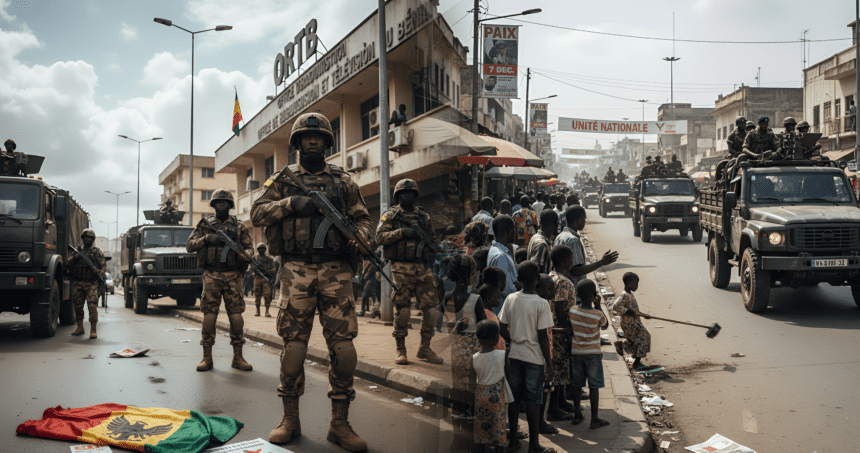
Benin experienced a sudden political shock on December 7 when a faction of soldiers announced that they had taken control of the government in what was later confirmed as a failed military takeover. In the early morning hours, armed soldiers appeared on state television in the capital, Cotonou, declaring the dissolution of the government and the suspension of constitutional order. The announcement immediately raised alarm across the country and the wider West African region, given the recent history of military coups in neighboring states.
The soldiers, led by a mid-ranking military officer, claimed that their actions were aimed at “saving the nation” and restoring stability. They cited growing security challenges, particularly in northern Benin where attacks linked to extremist groups operating in the Sahel region have increased, as well as alleged dissatisfaction within the armed forces over conditions, welfare, and political governance. Shortly after the broadcast, gunfire was reported near strategic locations, including areas close to the presidential residence, heightening fears of a prolonged confrontation.
However, the takeover attempt was short-lived. Loyal units of the Beninese armed forces swiftly mobilized and regained control of key institutions, including the national television broadcaster. By later that day, the government announced that the coup attempt had been foiled and that constitutional order had been restored. Several soldiers involved in the mutiny were arrested, while others fled or surrendered. Although authorities confirmed casualties during the clashes, exact figures were not immediately released.
President Patrice Talon, who has been in power since 2016 and is nearing the end of his final term, later addressed the nation, praising the loyalty and professionalism of the armed forces. He assured citizens that the state remained firmly in control and warned that those responsible for the attempted overthrow would face the full force of the law. Government officials emphasized that democratic institutions remained intact and that planned elections would proceed as scheduled.
Regional and international reactions were swift. The Economic Community of West African States (ECOWAS) and the African Union strongly condemned the attempted coup, reiterating their zero-tolerance stance toward unconstitutional changes of government. ECOWAS placed regional forces on standby, while neighboring Nigeria and other allies provided security and intelligence support to ensure stability. France also confirmed that it had offered logistical assistance to Benin at the government’s request.
Public reaction within Benin remained relatively calm. Unlike previous coups in the region, there were no large-scale protests either in support of or against the military faction. Markets reopened quickly, public transport resumed, and daily life in Cotonou and other cities largely returned to normal within hours. Nonetheless, the incident has deepened concerns about democratic vulnerability in West Africa, where several nations have experienced coups or attempted takeovers in recent years.
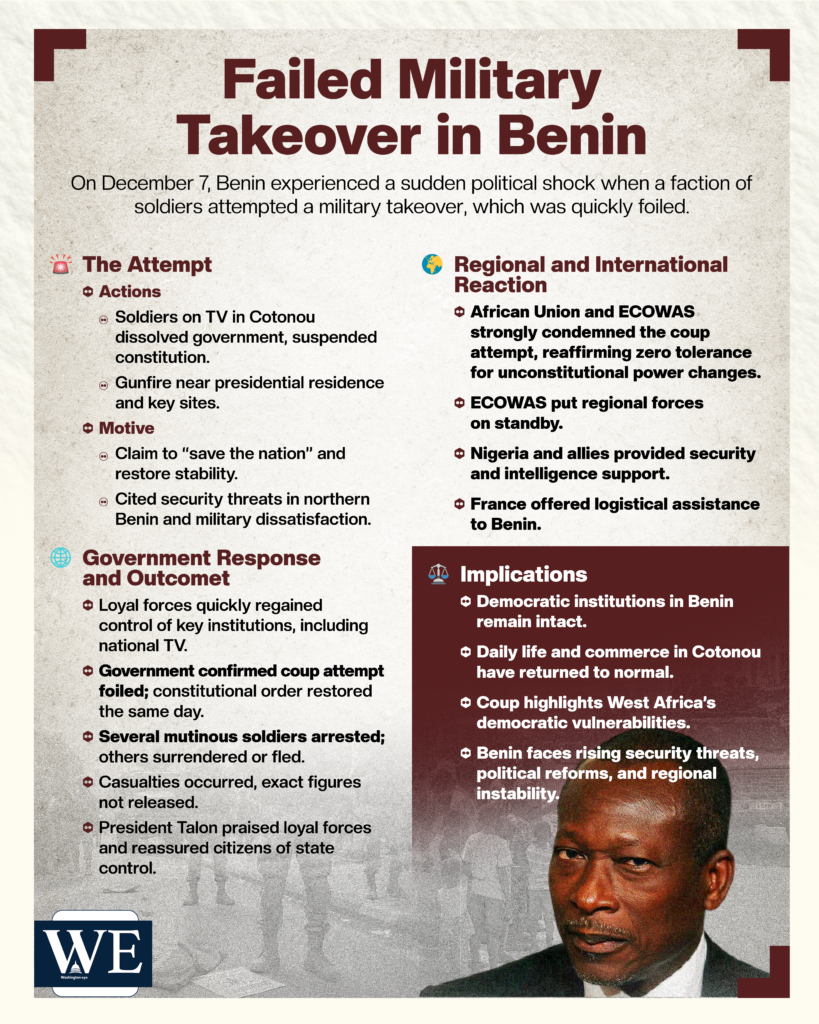
Analysts note that while Benin has long been regarded as one of the region’s more stable democracies, rising security threats, political reforms, and regional instability have placed increasing pressure on its institutions. With national elections approaching in 2026, the failed coup serves as a stark reminder of the challenges facing civilian governments across the Sahel and coastal West Africa.