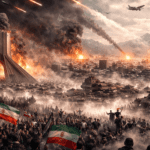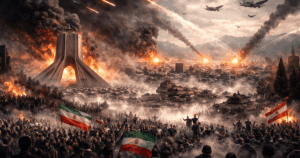

Iran’s Supreme Leader Ayatollah Ali Khamenei, one of the most powerful and controversial figures in Middle Eastern politics, was killed in a coordinated United States–Israel military strike on February 28, 2026, in Tehran, according to Iranian state media and multiple international reports. The attack targeted senior Iranian leadership during an escalating conflict between Iran, Israel, and the United States, marking one of the most dramatic moments in modern Middle Eastern geopolitics.
The strike reportedly took place early in the morning in Tehran, where Khamenei was attending a high-level meeting with senior security officials. Intelligence gathered by U.S. and Israeli agencies tracked the meeting and identified the location of several top Iranian leaders. Within minutes, Israeli aircraft launched a series of precision airstrikes, dropping dozens of bombs on the compound and nearby strategic sites. The operation killed Khamenei and several other top officials, including senior advisers and military commanders.
Iranian authorities confirmed the death the following day and declared 40 days of national mourning. The strikes also caused heavy damage to Khamenei’s residence and nearby government buildings. Several members of his extended family were reportedly among those killed in the attack.

Ayatollah Ali Khamenei, who was 86 years old, had served as Iran’s Supreme Leader since 1989, succeeding the founder of the Islamic Republic, Ayatollah Ruhollah Khomeini. As the country’s highest authority, he controlled the armed forces, judiciary, state media, and key aspects of foreign policy. His influence shaped Iran’s regional strategy, including its support for allied groups across the Middle East and its long-standing confrontation with the United States and Israel.
Born in Mashhad in 1939, Khamenei was a cleric who became involved in revolutionary activities against Iran’s monarchy during the 1960s and 1970s. After the 1979 Islamic Revolution, he rose quickly within the new political system and served as Iran’s president from 1981 to 1989 before becoming Supreme Leader. Over the decades, he built a powerful network within the Islamic Revolutionary Guard Corps (IRGC) and the clerical establishment, consolidating control over the country’s political system.
According to U.S. and Israeli officials, the strike was part of a broader military campaign targeting Iran’s nuclear and missile programs as well as its top leadership. Israeli authorities said intelligence indicated that Iran was preparing to move sensitive nuclear infrastructure and expand missile production in heavily fortified underground sites. The operation, they argued, was intended to disrupt those plans and weaken Iran’s leadership structure.
Iran strongly condemned the attack, calling it an “illegal act of aggression” and vowing retaliation. Iranian forces launched missile and drone strikes against Israeli targets and U.S. bases in the region shortly after the operation. Senior Iranian officials warned that those responsible would “pay the price,” signaling the possibility of a wider regional conflict.
The killing of Khamenei has also triggered a leadership crisis within Iran. A temporary governing council composed of senior officials has taken over state authority while the Assembly of Experts, a powerful clerical body, works to select the country’s next supreme leader. The decision is expected to shape Iran’s future political direction and its approach toward the West.
International reactions have been mixed. Some Western leaders described the strike as a decisive blow to Iran’s military leadership, while others warned that it could destabilize the region further. Several political groups allied with Iran, including militant organizations in the Middle East, mourned Khamenei and condemned the operation as a “heinous attack.”
Within Iran, public reactions have been divided. Large state-organized gatherings were held in mourning for the long-time leader, while some citizens reportedly celebrated the event, reflecting deep political divisions inside the country. Analysts say the power vacuum could strengthen the role of Iran’s Revolutionary Guard Corps and potentially push the country toward a more hardline stance in regional politics.
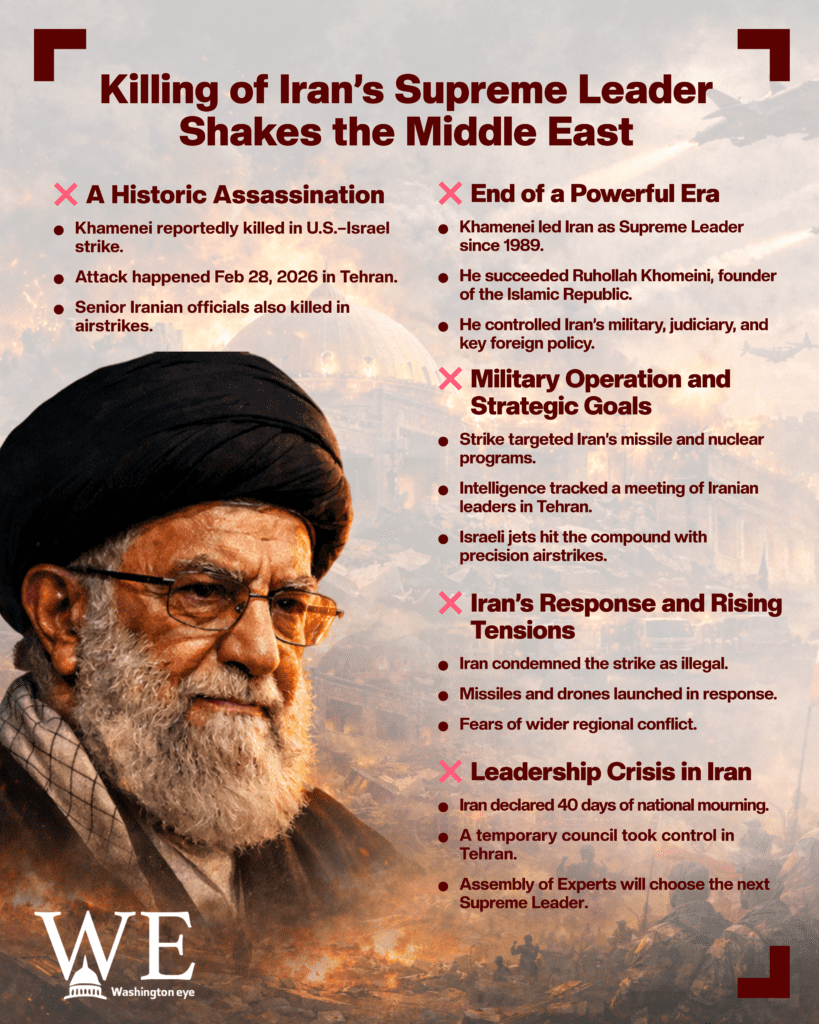
The death of Ayatollah Ali Khamenei marks a historic turning point for Iran and the Middle East. As the region watches closely for Iran’s next leader and possible retaliation, many experts warn that the assassination could reshape regional alliances, escalate military tensions, and redefine the balance of power in the Middle East for years to come.