Egypt’s World Cup journey against Argentina did not only end in a controversial defeat, it exposed how racism and political double standards continue to shape global football when a team publicly aligns itself with Palestine. The treatment of Egypt’s coach and fans in the days surrounding the match reflects how sporting spaces can punish visible solidarity with Palestinians instead of protecting those who speak out.
A Gesture That Turned a Match into a Message
When coach Hossam Hassan used his news conference to affirm that anyone who does not feel for Palestinians “is not human”, he turned a routine media appearance into a direct moral statement on Gaza’s suffering. His gesture of raising the official crossed arms symbol against racism during the Argentina match, only to receive a yellow card rather than institutional support, cast serious doubt on the sincerity of FIFA’s anti-racism protocol. This episode signalled that when anti-racism gestures are intertwined with Palestine solidarity, they are more likely to be sanctioned than respected.
How Egypt and Its Fans Experienced Racism
The racist treatment did not unfold in abstraction, but through concrete incidents experienced by Egyptians in the stands. Video accounts and testimonies from the stadium describe Egyptian fans being pelted with objects, subjected to slurs, and confronted with Israeli flags brandished in ways clearly intended to provoke them after their team had embraced the Palestinian cause.
Reports of discriminatory security checks added yet another layer to how Egypt’s match against Argentina became a case study in racialized policing of pro‑Palestine visibility. Outside Mercedes-Benz Stadium, videos showed security staff repeatedly pulling aside fans wearing Egyptian shirts or carrying Egyptian flags for additional pat‑downs, while many Argentina supporters walked through with far less scrutiny. In one widely shared clip, an Egyptian fan confronting a guard about whether “only Egypt” was being patted down received the blunt reply that these were “the orders” at that moment, a response widely interpreted as confirmation that profiling was not incidental but procedurally embedded. Egyptian supporters also recounted being instructed to discard or alter items associated with Egypt, even as nearby Argentina fans were allowed to keep their own banners and paraphernalia, reinforcing the impression that visibly Arab or Palestine‑aligned fans were being treated as presumptive security risks rather than ordinary spectators. The absence of any detailed, transparent justification from tournament organizers or stadium authorities, despite the viral spread of this footage and mounting accusations of racism, deepened the sense that security protocols themselves had become part of a broader pattern of punishment: instead of protecting those who stood with Palestine, the infrastructure of the World Cup appeared to surveil and discipline them for making their solidarity visible.
Racism as Punishment for Palestine Solidarity?
The timing and intensity of this hostility suggest that Egypt was not targeted arbitrarily but precisely because the coach and team placed Palestine at the center of their public narrative. Once Hossam Hassan waved the Palestinian flag and dedicated victories to Egyptians and Palestinians, Egypt became symbolically linked to a cause many powerful actors would rather keep off the World Cup stage. In this context, racism functioned as a tool of punishment and deterrence, signalling that stepping outside an “acceptable” apolitical script can carry costs in how referees, security, and segments of rival fan bases treat you.
Financial Logic Behind Selective Enforcement
The unequal response to Egypt’s complaints also has to be read through the financial logic that governs modern football, where tournaments like the World Cup depend on enormous flows of money from broadcasting, sponsorships, and betting. Sports betting companies have faced significant exposure at this World Cup because star players and major teams have often met expectations and won, meaning many popular bets have paid out rather than failing. Since a share of betting revenue feeds back into football through sponsorship and promotional deals, these outcomes do not remain isolated from the wider commercial ecosystem that surrounds the tournament.
In parallel, economists and business analysts highlight how crucial teams such as Argentina are to the financial success of the competition. As reigning champions with a global fan base, Argentina’s continued presence sustains higher television audiences, ticket demand, and tourist spending, while an early exit would risk noticeable drops in viewership and advertising income across multiple markets. The commercial value attached to keeping such teams deep into the tournament creates structural incentives to prioritize their interests, whether consciously or not, over those of less powerful federations.
Taken together, these dynamics make it far safer for institutions to minimize or downplay racist incidents affecting Egypt, and to treat a Palestine aligned coach as a disciplinary problem, than to take decisions that could be perceived as harming star driven narratives or the financial expectations of sponsors and betting partners.
Global Voices and the Limits of Solidarity
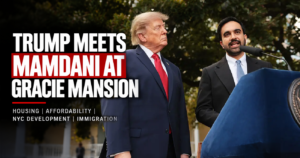
The backlash against Egypt’s elimination has resonated far beyond Egypt, drawing in political leaders, football managers, and analysts who view the match as a symbol of deeper injustices. New York City Mayor Zohran Mamdani publicly declared that Egypt were “robbed” against Argentina and suggested that Egypt were effectively facing not only Argentina, but also the governing structures around the game, echoing the feeling that the contest was stacked against a team that took a visible stand for Palestine. From within football, José Mourinho praised Egypt’s players as “warriors” who made one of the world’s biggest teams suffer, and argued that when you play this Argentina side you are “not just trying to beat eleven men on the pitch” but also trying to overcome the influence of officiating and the larger script that seems to shape the tournament’s narrative.
These kinds of statements, combined with support from other athletes, commentators, and cultural figures who have condemned racism in football and expressed solidarity with Gaza, help reframe Egypt’s story from one of supposed naivety to one of moral courage and structural vulnerability. At the same time, the uneven nature of celebrity and media responses, with many mainstream outlets still treating the controversy as a narrow debate over refereeing decisions rather than as part of a racialized and political pattern, shows how global solidarity is filtered through power relations that continue to privilege commercially attractive narratives over those that center Palestine and the experiences of teams like Egypt.
A Final Note
What happened to Egypt and its fans at this World Cup should not be reduced to an isolated controversy or a mere refereeing dispute. It reveals how racism, political pressure, and commercial interests intersect to discipline teams that choose to stand with Palestine, and it raises urgent questions about whether the global game is willing to defend those who use its biggest stage to speak for justice rather than remain comfortably silent.