Suspicious messages and calls have become a routine backdrop to everyday life in the United States, but new national polling suggests the more Americans are exposed to scams, the less likely many are to seek formal help when they fall victim. This widening gap between victimization and reporting is shaping a quiet crisis in consumer protection and public trust.
Constant Scam Exposure, Normalized Risk
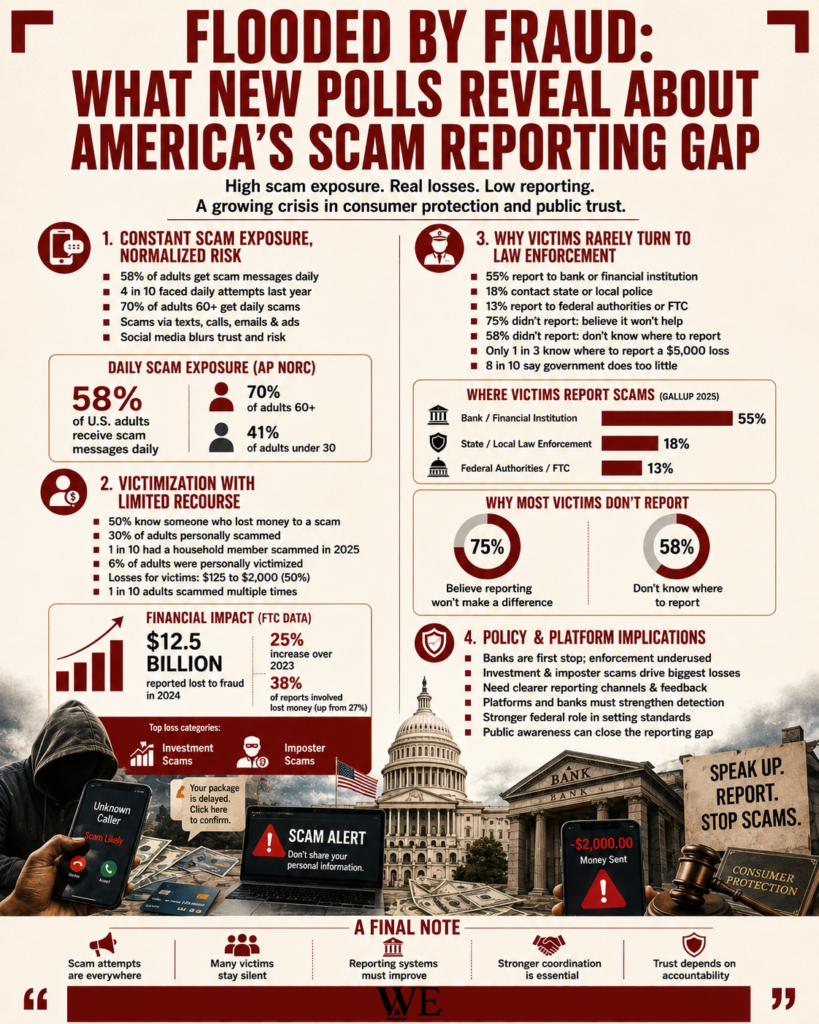
Recent survey data from AP NORC show that a clear majority of adults in the United States receive suspected scam communications on a daily basis, including text messages, phone calls, emails and online ads. More than half, 58 percent, report this daily exposure, while separate polling by Gallup and the Stop Scams Alliance finds that roughly four in ten Americans faced daily scam attempts last year. This level of routine exposure risks normalizing fraudulent contact as an unavoidable feature of digital life rather than as a reportable offence.
The AP NORC results indicate that older adults are especially likely to face frequent attempts, with about seven in ten people aged 60 and above saying a suspected scammer contacts them at least once a day, compared to around four in ten adults under 30. At the same time, scams commonly arrive through channels that blur social and commercial boundaries, such as package or banking related messages and outreach via platforms like Facebook, WhatsApp and Instagram. This combination of volume, demographic variation and social media penetration makes it harder for individuals to distinguish genuine communication from fraudulent schemes.
Victimization with Limited Recourse
Exposure is translating into real harm. The AP NORC poll finds that about half of United States adults know a friend or family member who has lost money to a scam, and around three in ten say they themselves have been tricked into giving away money or personal data. The Gallup survey adds a yearly snapshot, estimating that about one in ten adults had a household member scammed in 2025, with six percent saying they personally were victimized. Among those households, about half reported losses between 125 and 2000 dollars, and roughly one in ten adults have been scammed multiple times.
Regulatory data underline the scale of losses when scams succeed. Federal Trade Commission figures show consumers reported more than 12.5 billion dollars lost to fraud in 2024, a 25 percent increase over the previous year, even though overall report numbers stayed relatively stable. The share of people who reported losing money when they reported a fraud rose from 27 percent in 2023 to 38 percent in 2024, with investment and imposter scams accounting for the largest reported losses. These trends suggest both rising financial stakes and growing sophistication in how scammers target individuals and households.

Why Victims Rarely Turn to Law Enforcement
Despite the widespread acknowledgement that scams pose a threat, the new polling shows that most victims do not turn to the government or police. In the Gallup survey, 55 percent of people who were scammed in 2025 reported the incident to a bank, credit union or other financial institution, but only 18 percent contacted state or local law enforcement and just 13 percent reported to federal authorities or the Federal Trade Commission. For many, the perceived futility of engaging with authorities is decisive: about 75 percent of scam victims who did not report said they believed it would not make a difference in recovering their money, while 58 percent said they did not know where to report.
The AP NORC poll further shows that while a majority of Americans feel confident about reporting to banks or credit card companies, only about one quarter say they are extremely or very confident about reporting to federal or state law enforcement. In the Gallup data, only about one third of adults indicate they would know where to file a report if they lost 5000 dollars to a scam today. Against this backdrop, it is unsurprising that around eight in ten respondents believe the government is definitely or probably doing too little to prevent scams, a view held across party lines.
Policy and Platform Implications
The polling points to a structural imbalance between how scams occur and how accountability is pursued. Financial institutions appear to be the primary avenue for victim response, while public enforcement mechanisms remain underused and perceived as opaque. At the same time, FTC data show that losses tied to online investment schemes and imposter scams continue to grow, often facilitated by bank transfers or cryptocurrency that are hard to reverse. This environment pushes responsibility toward private actors, especially banks and social media platforms, even as many respondents express a desire for stronger federal involvement in setting standards and securing redress.

For policymakers, the combination of high exposure, low reporting and rising losses suggests that improving the visibility and accessibility of reporting channels may be as important as tightening fraud statutes. Public information campaigns that clearly identify where and how to report, combined with feedback to victims about case handling, could help shift the perception that reporting is useless. For platforms and financial firms, the data imply that proactive detection and customer support will remain central to maintaining trust, especially when scams exploit interfaces that imitate legitimate services.
A Final Note
As scam attempts become embedded in everyday digital life, the reporting gap revealed in these polls is likely to shape both the evolution of fraud and the legitimacy of consumer protection, making institutional clarity and coordination critical to any effective response.