
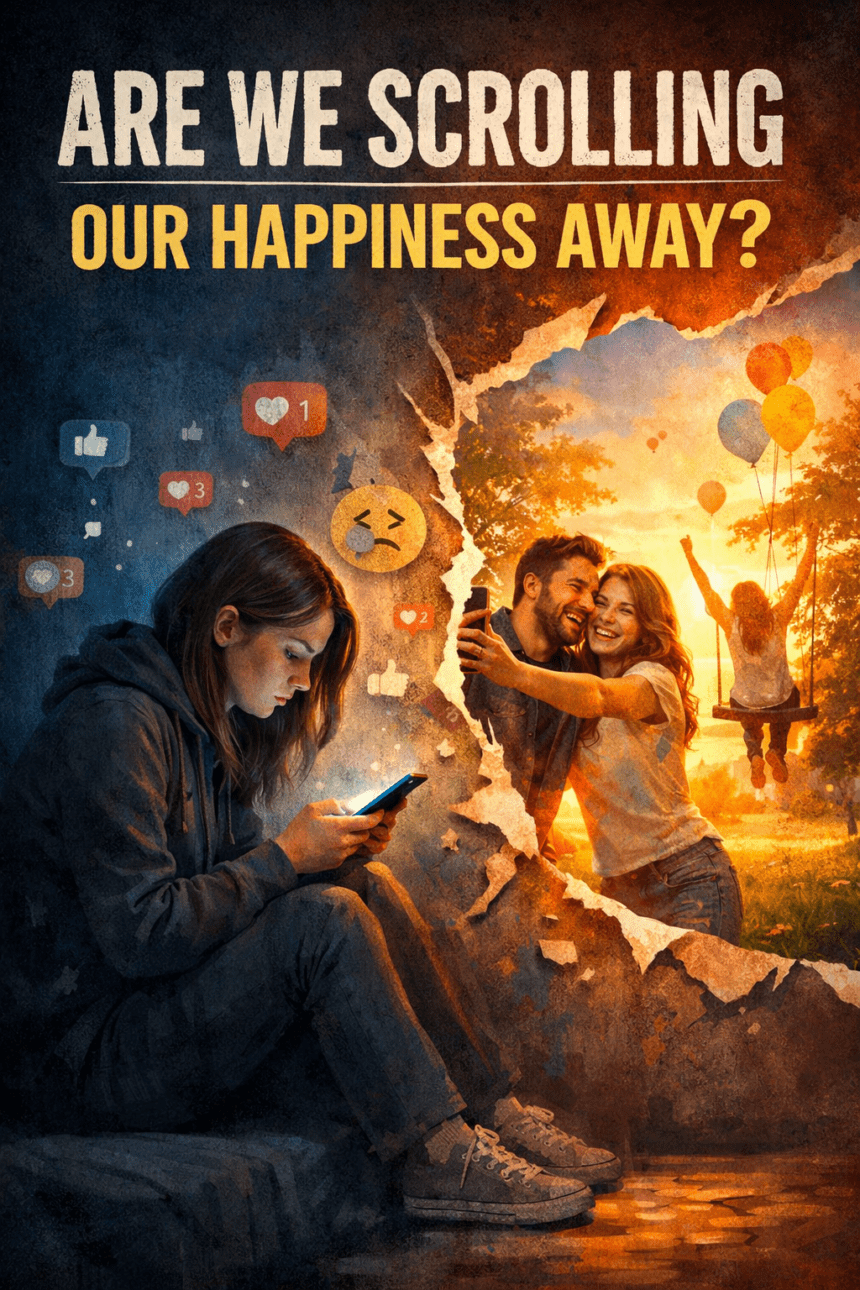
In an age where smartphones rarely leave our hands, a growing body of global research is raising an urgent question: are we trading real happiness for endless scrolling? From bedrooms in Islamabad to metros in London and campuses in New York, screen time has quietly become one of the most defining habits of modern life. What began as a tool for connection has evolved into a powerful ecosystem of algorithms, dopamine triggers, and digital dependency, reshaping how people feel, interact, and even define happiness.
Recent studies and reports indicate that social media use is now nearly universal, particularly among young people. Up to 95% of teenagers are active on at least one platform, with many reporting that they are online “almost constantly.” Yet the nature of this engagement is changing. Instead of active participation, posting, commenting, or interacting, users are increasingly becoming passive consumers, endlessly scrolling through curated feeds. This shift from interaction to observation is at the core of growing concerns around emotional well-being.
The “why” behind this behavior lies in design. Social media platforms are engineered to keep users hooked. Infinite scrolling, personalized content, and unpredictable rewards like, shares, or viral moments, trigger the brain’s dopamine system, the same reward pathway associated with addictive behaviors. Research shows that habit formation can begin in as little as 35 minutes of use, with some heavy users exceeding four hours daily on a single platform. What feels like harmless browsing often becomes compulsive behavior.

But how much is too much? According to findings linked to the 2026 World Happiness Report, moderate use, around one hour daily, may be associated with better life satisfaction, while excessive use (averaging 2.5 hours or more) correlates with lower happiness levels. The issue is not just time spent, but how that time is used. Passive scrolling, in particular, has been strongly linked to anxiety and emotional distress.
Health experts warn that the psychological impact is becoming increasingly visible. Heavy social media use is associated with higher risks of depression, anxiety, loneliness, and even self-harm. Adolescents who spend more than five hours a day online are significantly more likely to experience mental health challenges, including anxiety and depressive symptoms. Moreover, addictive patterns, rather than screen time alone, have been linked to more severe outcomes, including suicidal thoughts among teenagers.
Beyond mental health, physical well-being is also affected. Studies show that using smartphones in bed can increase the risk of insomnia by nearly 60%, reducing sleep quality and overall health. Reduced sleep, in turn, contributes to fatigue, poor concentration, and long-term health risks such as cardiovascular issues.
Another dimension of the problem is social isolation. Ironically, platforms designed to connect people may be making users feel more alone. The culture of comparison, seeing others’ curated lives, achievements, and appearances, often leads to feelings of inadequacy and “fear of missing out” (FOMO). Users may feel surrounded by people online yet disconnected in real life, creating what experts describe as “loneliness in a crowd.”
However, the issue is far from black and white. Critics argue that blaming social media alone oversimplifies a complex reality. Not all usage is harmful. For many, platforms provide community, support networks, and access to information that would otherwise be unavailable. The impact varies depending on individual circumstances, type of content, and usage patterns. Some researchers even highlight that moderate, purposeful engagement can enhance well-being rather than diminish it.
The debate, therefore, is not about eliminating social media but understanding its influence. Policymakers, researchers, and tech companies are increasingly calling for a balanced approach, one that acknowledges both benefits and risks. Countries are already exploring regulations, particularly for younger users, while tech companies face pressure to redesign platforms with user well-being in mind.
As the digital age continues to evolve, the question remains deeply personal as well as societal: are we in control of our screens, or are they shaping our emotions, habits, and happiness? The answer may lie not in quitting technology, but in redefining how we use it, before the scroll becomes a substitute for real life.