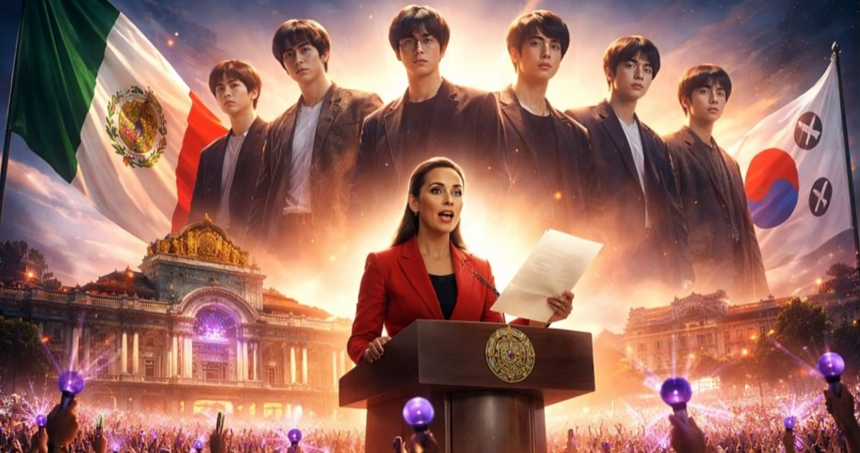
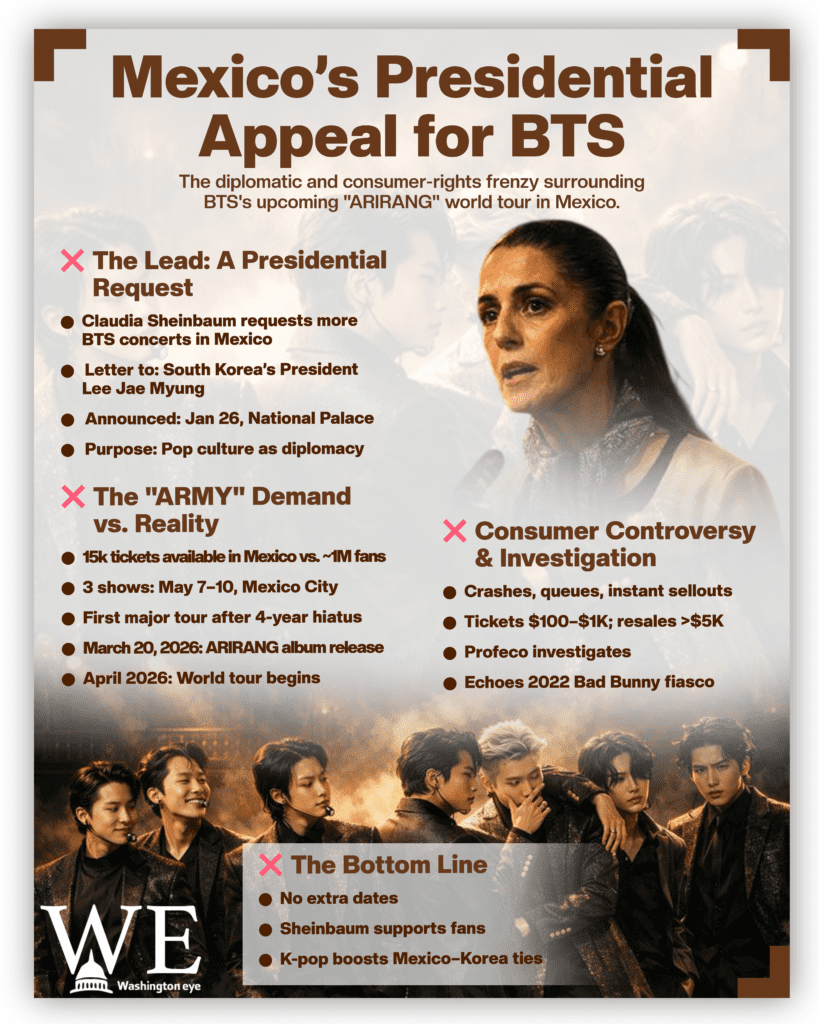
Mexico’s President Claudia Sheinbaum has asked South Korea’s leadership to help bring additional BTS concerts to Mexico after a lightning-fast sellout of the K-pop group’s newly announced Mexico dates triggered a wave of frustration among fans and renewed scrutiny of ticketing practices. The request, framed half as pop-culture cheerleading and half as public diplomacy, landed in an unusually formal place: the presidential pulpit.
Speaking during a Jan. 26 news briefing at the National Palace in Mexico City, Sheinbaum said she had sent a letter to South Korea requesting support for more shows and had also spoken with concert promoters about whether additional dates could be added. The appeal came as Mexican fans, many calling themselves ARMY, the group’s global fandom, described online a “battle” for seats and an hours-long scramble through queues and crashed pages as tickets vanished.
According to reporting by Reuters, Sheinbaum’s request was directed to South Korean President Lee Jae Myung amid what the president described as extraordinary demand: roughly 150,000 tickets made available for the Mexico leg, compared with an estimated one million Mexicans who wanted to attend. The concerts currently on the calendar are scheduled in Mexico City from May 7–10, with only three shows listed in the ticket inventory cited by Reuters.
The frenzy is fueled by timing. BTS has been largely off the road since 2022 as members completed South Korea’s mandatory military service, and the group’s return is being marketed as a major global moment. The Associated Press reported that the upcoming Mexico performances are part of the group’s first major run after a four-year pause, with a new album titled “ARIRANG” slated for March 20 and a world tour beginning in April 2026. For Mexico, already a heavyweight stop for international tours, the prospect of a limited number of dates for one of the world’s most in-demand acts was a recipe for instant sellouts.

But the political interest didn’t emerge only from fan excitement. It also reflects a public-consumer fight playing out alongside the hype: allegations of price gouging, scalping, and resale markups that quickly pushed tickets far beyond the reach of ordinary fans. Reuters reported Mexico’s consumer watchdog Profeco opened an investigation into Ticketmaster and targeted resale platforms, after initial prices ranging from about $100 to more than $1,000 were seen climbing to more than $5,000 on secondary markets. The controversy revived memories of Mexico’s 2022 Bad Bunny ticketing fiasco, when Ticketmaster apologized after concertgoers with valid purchases were denied entry amid reports of duplicated or invalid tickets.
Concert organizers, meanwhile, have cautioned that adding dates may not be feasible. The AP reported that promoters indicated no additional dates could be added “at this time,” even as officials said they were working with promoters and ticketing firms to improve fairness and keep pricing transparent. In the background is a larger conversation governments worldwide have been forced to confront: how to regulate ticketing markets that increasingly behave like high-speed trading floors, where bots, dynamic pricing, and resale arbitrage can inflate costs within minutes.
Still, the Sheinbaum letter carried symbolism beyond tickets. It highlighted how culture functions as soft power, and how pop phenomena can become unexpected channels of state-to-state warmth. Mexico and South Korea established diplomatic relations in 1962 and have expanded ties across trade, investment, and cultural exchange over the decades. By turning a fan demand into a diplomatic outreach, the Mexican president placed K-pop in the same conversation as official bilateral relations, an illustration of how governments sometimes lean into cultural waves to connect with youth, signal openness, and frame cooperation in everyday terms.

In Mexico, the episode also doubles as domestic politics: a popular leader publicly “taking the side” of young fans, while government agencies pursue consumer protections and make a show of confronting powerful ticketing systems. Whether or not more concerts materialize, the message was clear, Mexico sees global entertainment not just as nightlife, but as part of national prestige and economic activity, and it is willing to treat access and fairness as a public issue, not merely a private transaction.
For millions of fans refreshing screens and swapping queue tips, the diplomacy may feel secondary to one practical question: will there be more dates. For now, the answer remains uncertain, but the fact that it reached presidential correspondence underlines just how far the BTS craze can travel, from stadium lights to state letters.