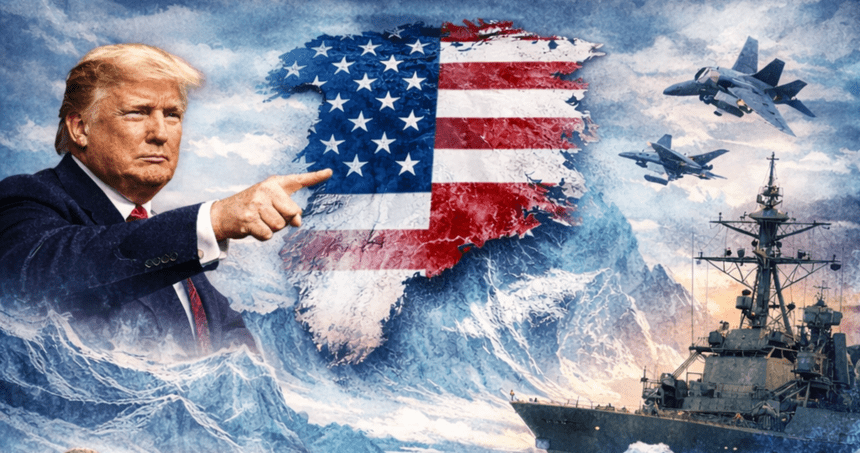
Trump and his administration are reportedly discussing a “range of options” to acquire Greenland, including potential military involvement, according to the White House. The Arctic island, a semi-autonomous region of Denmark, has become a flashpoint in transatlantic relations after Trump repeatedly framed control of Greenland as a national security priority.
The White House emphasized that military action is “always an option at the Commander-in-Chief’s disposal,” though officials later clarified that the US does not plan to invade the territory. Instead, the discussions also include purchasing Greenland outright or establishing a Compact of Free Association with the territory. Secretary of State Marco Rubio told lawmakers at a classified briefing that the administration’s focus is on strategic and commercial interests, rather than immediate military intervention.
European leaders have strongly opposed any aggressive moves. In a joint statement, the UK, France, Germany, Italy, Poland, Spain, and Denmark reaffirmed Denmark’s sovereignty over Greenland and called for resolving Arctic security issues collectively within NATO. Greenland’s Prime Minister Jens-Frederik Nielsen welcomed the call for respectful dialogue, highlighting that Greenlandic status is “rooted in international law and the principle of territorial integrity.”
Greenland, home to around 57,000 residents, has had extensive self-rule since 1979, though Denmark retains authority over defense and foreign policy. Most Greenlanders support eventual independence from Denmark, but polls show overwhelming opposition to US annexation. Locals have expressed alarm at the prospect of US control, citing fears about sovereignty and potential parallels with Venezuela’s recent political crisis.
Strategically, Greenland is increasingly important as melting Arctic ice opens new shipping routes and exposes untapped natural resources, including rare earth minerals. Trump has long cited the island’s location and resources as a rationale for closer US involvement. Critics warn that pursuing Greenland could strain relations with NATO allies and destabilize the Arctic region, while supporters argue that it strengthens US influence in an area of growing geopolitical competition with Russia and China.
The debate over Greenland highlights broader questions about US foreign policy priorities, balancing national security ambitions with respect for international law and allied relations. Washington has reiterated that dialogue with Denmark is ongoing, though the possibility of force remains a point of concern both in Europe and among Greenlandic residents.