
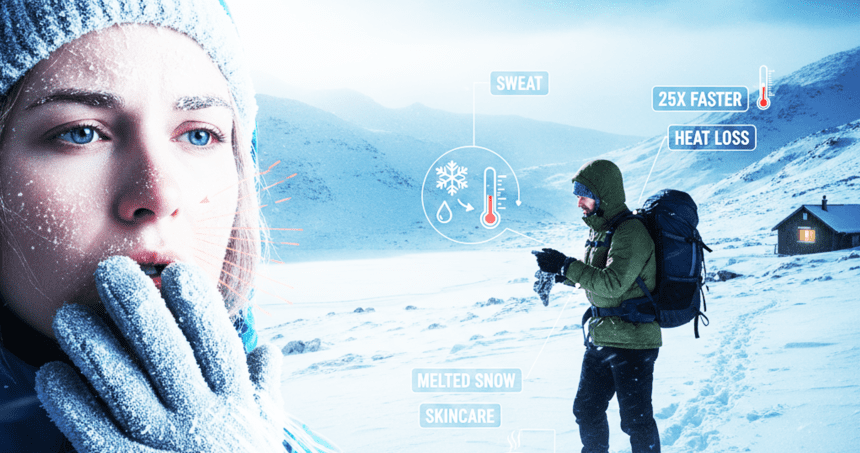
Health experts across North America and Europe have issued new winter advisories warning that water-based moisture on the skin, whether from sweat, melted snow, wet clothing, or certain skin-care products, can sharply increase the risk of frostbite during prolonged exposure to cold weather. The concern intensified in December 2025 after hospitals in Minnesota, Alberta, Bavaria, and parts of Scandinavia reported an unusually early rise in frostbite cases. Early reviews by the European Cold-Weather Health Consortium revealed that nearly 40 percent of injuries occurred in individuals whose clothing or skin was damp when exposed to sub-zero temperatures, prompting renewed public attention to the role moisture plays in accelerating heat loss.
Frostbite develops when skin and underlying tissues freeze, usually beginning in the fingers, toes, ears, and nose. While cold temperatures alone can trigger it, researchers explain that water dramatically speeds up the cooling process because moisture pulls heat from the body far faster than dry air. Studies from the University of Manitoba’s Cold Research Laboratory show that water conducts heat up to 25 times more efficiently than air, meaning even light dampness, such as perspiration inside gloves or socks, can cause skin to freeze in minutes. Dr. Helena Krautz, a winter-health specialist in Munich, emphasized that people often underestimate risk during mild freezing conditions, explaining that “even at –5°C, wet skin or damp clothing can cause frostbite far more quickly, especially when wind chill is involved.” Wind accelerates evaporation, allowing the skin temperature to plummet rapidly.
Beyond environmental moisture, scientists also note a chemical dimension. Many winter skincare products, including water-heavy gels, serums, and lotions, contain humectants such as glycerin, hyaluronic acid, and propylene glycol. These ingredients draw moisture toward the skin surface, which is useful indoors but potentially problematic in freezing outdoor temperatures. Dermatologists warn that applying such products immediately before going outside may trap surface moisture that cools rapidly in cold environments. Dr. Nadia Morelli, a dermatologist in Milan, advised that moisturizers should still be used in winter but applied at least half an hour before exposure, giving the product time to absorb. She added that heavy water-based cosmetics or serums should be avoided before extended outdoor activities such as skiing, winter hiking, or commuting in freezing conditions.

Recent studies bolster these warnings. A 2024–2025 joint study conducted in Norway and Canada found that moisture-related heat loss increased cold-injury risk by up to 70 percent among outdoor workers, postal carriers, athletes, and delivery riders. The research documented cases where frostbite began forming within 8 to 10 minutes when wet skin was exposed to freezing temperatures combined with strong winds. Similarly, a U.S. Army environmental study reported that soldiers training in sub-zero climates were more vulnerable when their base layers became soaked with sweat, highlighting the essential role of proper moisture-wicking clothing.

Government agencies have responded quickly. Public health departments in Sweden, Germany, and parts of the northern United States have updated winter safety guidelines, urging residents to prioritize dry clothing and carry extra gloves and socks during outdoor activities. Cities including Toronto, Chicago, Oslo, and Munich have issued alerts encouraging people to limit exposure during windy cold snaps and to avoid tight cotton layers, which trap moisture rather than repelling it. The winter-sports community welcomed the alerts, noting that moisture management has long been central to mountaineering and skiing safety. Meanwhile, general social media users expressed surprise that even mild perspiration could dramatically increase the risk of frostbite.
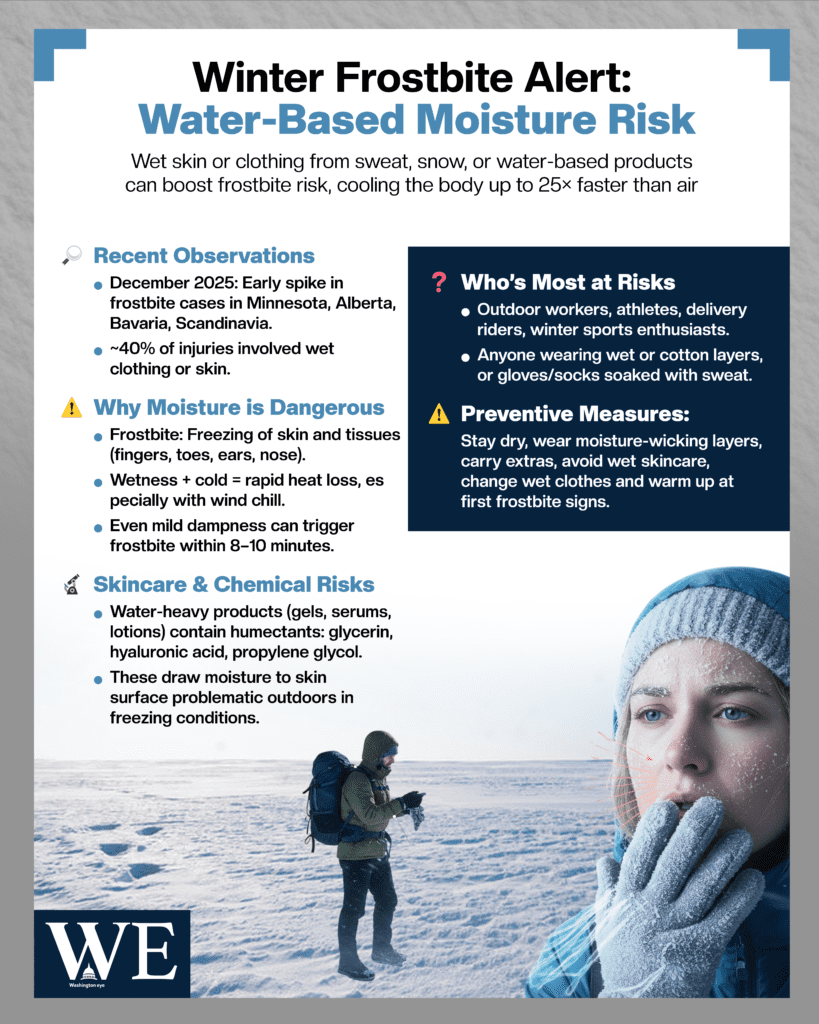
Medical professionals are urging caution as winter deepens. They recommend staying dry at all costs, using synthetic or wool base layers that wick moisture away from the skin, avoiding thick water-based skincare immediately before exposure, and changing wet clothing promptly. They also advise that individuals look out for early signs of frostbite, such as numbness, pale or waxy skin, or a tingling sensation, all of which should prompt immediate warming and, if symptoms persist, seek medical attention. As temperatures continue to drop across major northern regions, authorities warn that moisture, often overlooked, may become one of the most decisive factors determining who stays safe and who faces cold-related injuries this season.