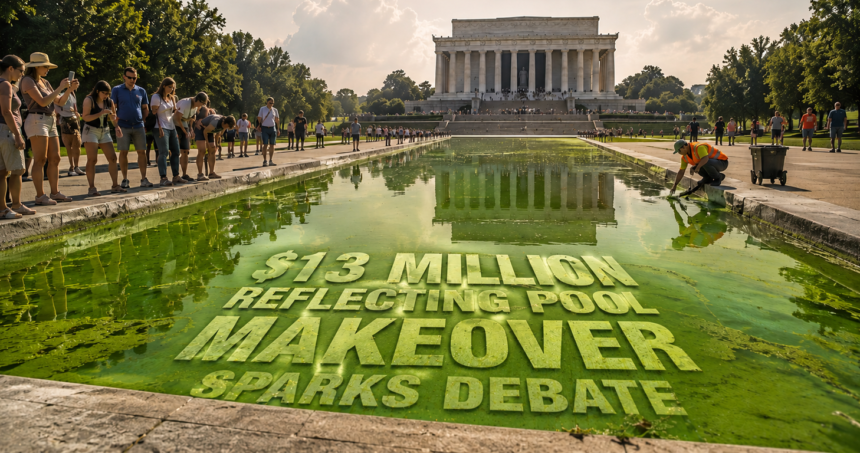
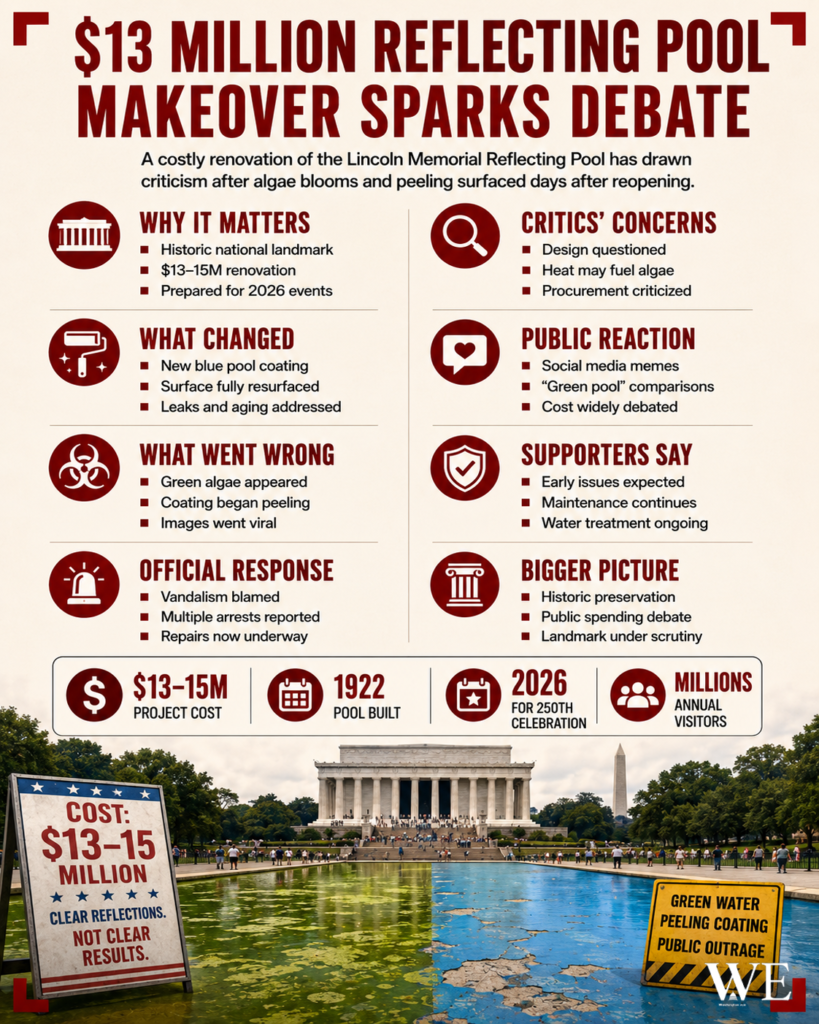
A multimillion-dollar makeover of the iconic Lincoln Memorial Reflecting Pool has become one of the most talked-about public works projects in the United States after the newly renovated landmark developed unexpected problems within days of reopening. The project, which cost approximately $13–15 million according to various reports, was intended to improve the appearance and functionality of the historic pool ahead of celebrations marking the 250th anniversary of the United States in 2026. Instead, it has triggered public criticism, political debate and a flood of social media memes.
The Lincoln Memorial Reflecting Pool, located on the National Mall between the Lincoln Memorial and the Washington Monument in Washington, D.C., is one of America’s most recognizable landmarks. Originally constructed in 1922–23, the pool attracts millions of visitors annually and has served as the backdrop for some of the most significant moments in American history, including the 1963 March on Washington where Martin Luther King Jr. delivered his famous “I Have a Dream” speech.
The latest renovation was championed by President Donald Trump, who ordered a major resurfacing and aesthetic overhaul of the pool. One of the most controversial changes was the decision to coat the bottom with a distinctive “American Flag Blue” finish, intended to create clearer reflections and a more visually striking appearance. Administration officials argued that the project would modernize the aging structure, address leaks and improve the visitor experience before the nation’s semiquincentennial celebrations.

Before the renovation, the Reflecting Pool was known for recurring maintenance challenges, including algae growth, aging infrastructure and water quality concerns. Supporters of the makeover said the new coating and upgraded systems would help solve these long-standing issues. However, only days after the project was completed and the pool was refilled, the water began turning green due to algae blooms, while sections of the new surface reportedly started peeling. Images of the green-tinted water quickly spread online, raising questions about whether the costly renovation had achieved its goals.
The controversy intensified when President Trump blamed vandalism for much of the damage. According to statements from the White House and federal officials, vandals allegedly poured chemicals into the pool, damaged the surface coating and created a large gash in parts of the newly renovated structure. Authorities reported multiple arrests, citations and police reports related to incidents at the site. U.S. Attorney Jeanine Pirro stated that those responsible would face prosecution.
Critics, however, argue that vandalism alone cannot explain the problems. Preservation advocates and engineering experts have suggested that the renovation may have failed to address deeper structural and environmental issues. Some have questioned the use of a blue coating, arguing that darker surfaces absorb more heat and may actually encourage algae growth during Washington’s hot summer months. Others have criticized the project’s procurement process, noting reports that contracts were awarded without the traditional competitive bidding procedures.
Public reaction has been swift and often humorous. Social media users compared the green water to a neglected backyard swimming pool, while others joked that the makeover transformed a national monument into a giant algae tank. Memes featuring before-and-after photographs circulated widely on X, Instagram and Facebook, with many users questioning how a project costing more than $13 million could encounter visible problems so quickly. Some posts sarcastically described the renovation as “America’s most expensive pool repainting project,” while others used edited images showing the reflecting pool as a giant bowl of green soup.

Supporters of the renovation maintain that the project should not be judged solely on early setbacks. They argue that large-scale infrastructure projects often face unforeseen issues after reopening and note that maintenance crews are actively working to remove algae and repair damaged areas. Officials say treatments involving hydrogen peroxide, filtration technologies and other methods have already reduced algae levels significantly.
Despite the criticism, the Reflecting Pool remains a powerful national symbol and a major tourist attraction. The debate surrounding its makeover has highlighted broader questions about public spending, historic preservation and the challenges of maintaining aging national landmarks in a changing environment. As repair crews continue their work, many Americans will be watching closely to see whether the multimillion-dollar project ultimately delivers the clear, mirror-like reflections that inspired the renovation in the first place.
For now, the Reflecting Pool’s transformation has achieved one undeniable outcome: it has become one of Washington’s most discussed landmarks, generating headlines, political arguments and countless memes far beyond the nation’s capital.