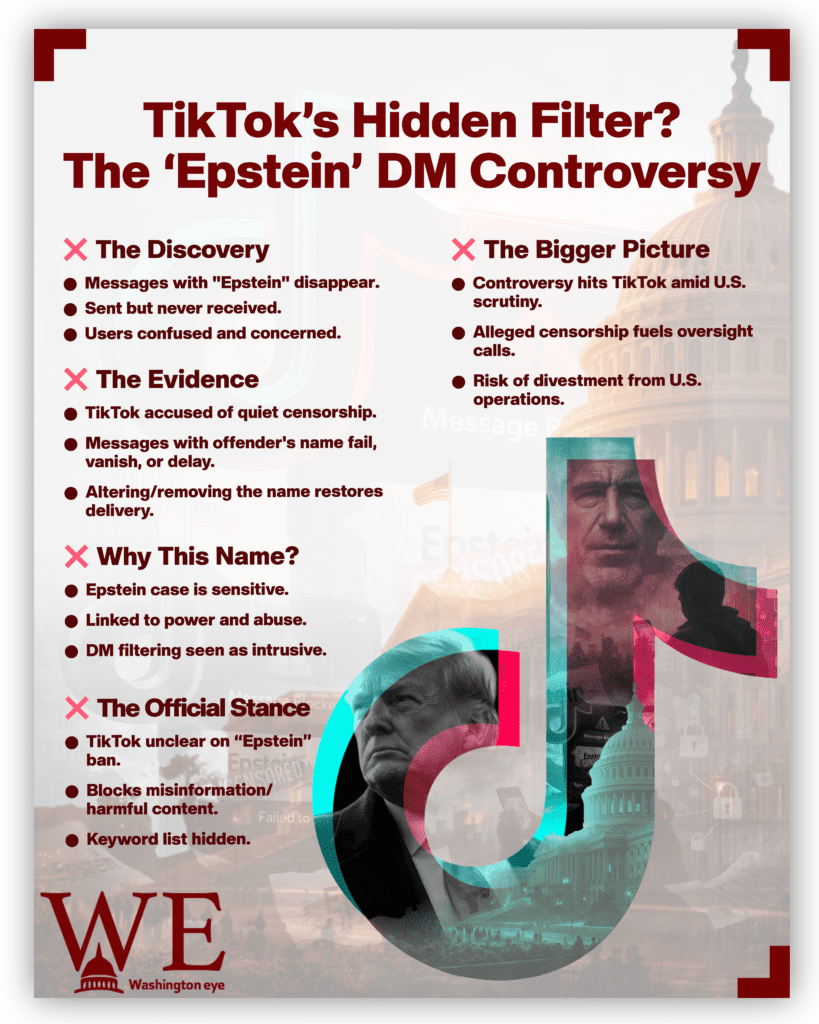
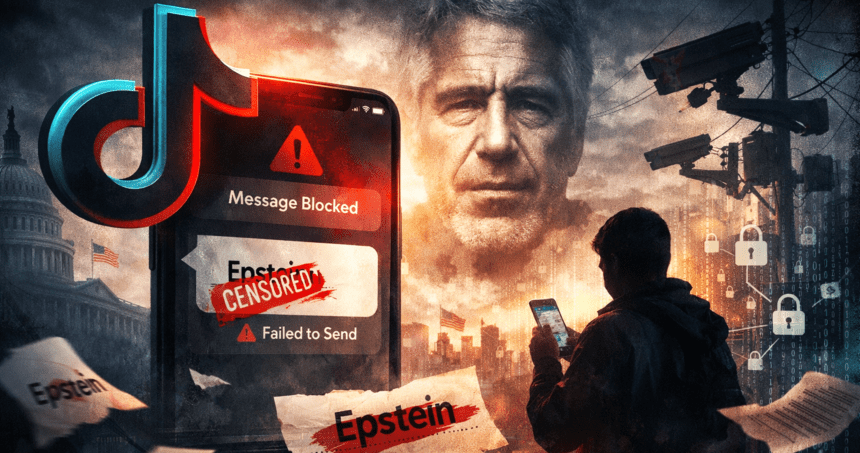
TikTok is facing renewed scrutiny after reports emerged that the platform is censoring the word “Epstein” in direct messages sent by users in the United States, which is raising questions about transparency, political sensitivity, and content moderation practices on one of the world’s most influential social media apps.
Multiple US users have reported that messages containing the word “Epstein” fail to deliver, are delayed, or disappear entirely when sent through TikTok’s private messaging system. In some cases, users say messages appear to be sent normally but are never received by the other person. When the same messages are re-sent with the word removed or replaced, delivery reportedly resumes without issue.
This filtering has triggered backlash online, particularly because the name Jeffrey Epstein remains closely associated with unresolved questions surrounding elite power, sexual abuse, and accountability. Epstein, a convicted sex offender, died in jail in 2019 while awaiting trial on federal sex trafficking charges, a case that continues to fuel public debate and conspiracy theories.
Critics argue that censoring the term, even in private messages, definitely crosses a significant line. While social media platforms routinely moderate public-facing content, interference in direct messages is widely viewed as more intrusive and harder to justify. Privacy advocates warn that such practices undermine user trust and raise questions about how extensively platforms monitor private communications.
TikTok has not publicly confirmed whether “Epstein” has been formally added to a restricted keyword list. However, the company has previously acknowledged using automated systems to block certain terms linked to misinformation, illegal activity, or sensitive events. TikTok says its moderation policies are designed to prevent harm, abuse, and the spread of dangerous falsehoods, but it rarely discloses specific keywords or enforcement mechanisms.
The issue also arrives amid heightened political pressure on TikTok in the United States. Lawmakers have repeatedly accused the Chinese-owned platform of opaque governance, excessive data collection, and potential susceptibility to political influence. Earlier this year, US officials renewed calls for stronger oversight or a forced divestment of TikTok’s American operations.