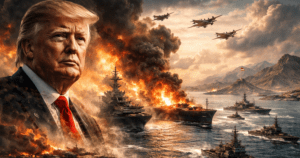
The bedrock of Western security is currently facing its most significant tremor in nearly eight decades as the American administration signals a potential departure from the North Atlantic Treaty Organization. While tensions regarding defense spending have historically strained the alliance, the current friction has transcended budgetary concerns to reach a fundamental ideological impasse. President Donald Trump and Secretary of State Marco Rubio have recently issued statements that challenge the very necessity of the pact, shifting the conversation from mere reform to the prospect of total withdrawal. This shift is not merely a localized political maneuver but represents a pivot in American foreign policy that could dismantle the postwar international order and force a massive restructuring of European defense capabilities.
Strategic Friction and the Paper Tiger Label
The primary catalyst for this recent escalation appears to be the refusal of several key European allies to support American military operations in the Middle East, specifically regarding the conflict with Iran. President Trump recently characterized the alliance as a paper tiger, suggesting that the organization lacks the actual strength or unity required to be a credible deterrent in modern warfare. His criticism extended specifically to the United Kingdom, where he rebuked Prime Minister Keir Starmer for declining to intervene in the Iran conflict. By questioning the efficacy of the Royal Navy and the utility of the alliance’s collective power, the President has signaled that he no longer views the organization as a vital asset but rather as a strategic liability that fails to serve American interests when called upon outside of European borders.
The Shift Toward A Transactional Alliance
Secretary of State Marco Rubio has mirrored this sentiment by describing the current state of the treaty as a one way street. In recent public addresses, Rubio argued that if the United States provides a security umbrella for Europe but is denied basic operational support such as basing rights and airspace access during its own military engagements, then the relationship must be reexamined. This perspective indicates a move toward a purely transactional foreign policy where membership is contingent upon immediate reciprocity rather than long term shared values or historical ties. Rubio has explicitly stated that once current conflicts conclude, the administration will likely need to determine if the alliance still serves its intended purpose or if it has become an outdated arrangement where America carries the burden without receiving the necessary logistical support from its partners.
Global Implications of an American Exit
The analytical implications of a potential United States withdrawal are profound and multifaceted. For decades, the American military presence in Europe has served as the primary deterrent against Russian aggression. Without the guarantee of American intervention, European nations would be forced to rapidly expand their own conventional and nuclear capabilities to fill the resulting power vacuum. Current estimates suggest that Europe would require approximately 300,000 additional troops and an annual defense spending increase of at least 250 billion euros to maintain a credible defense. Furthermore, a withdrawal could lead to the fragmentation of European security, as individual nations might seek bilateral agreements with Washington or even explore independent nuclear programs to ensure their survival. This would effectively end the era of multilateralism that has defined the West since 1949.
Legal Hurdles And Constitutional Conflict
Despite the forceful rhetoric from the executive branch, a formal exit remains legally complex. The National Defense Authorization Act of 2024 includes provisions that prohibit a president from unilaterally withdrawing from the alliance without the approval of two thirds of the Senate or an act of Congress. However, the administration could still undermine the effectiveness of the treaty by withholding funds or signaling that the United States would not honor the Article 5 commitment to collective defense. If the President attempts to bypass legislative requirements, it would likely trigger a constitutional crisis that would be decided by the Supreme Court. The outcome of such a legal battle would determine not only the future of the alliance but also the extent of executive power in shaping American foreign policy for generations to come.
More Read

A Final Note
As the administration continues to weigh its options, the global community remains in a state of high alert. The coming months will likely define whether the Western world maintains its unified front or if the era of the North Atlantic Treaty is drawing to an inevitable close.