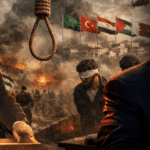
The recent arrival of approximately two hundred United States military personnel in Nigeria marks a significant pivot in international security dynamics within the Sahel. This deployment follows a series of kinetic operations including precision airstrikes launched during late December of twenty twenty five. While the official narrative focuses on specialized training and intelligence sharing, the move has sparked a global debate regarding the long term consequences of foreign military involvement. By shifting from a purely advisory role to a more active presence on the ground, the mission invites intense scrutiny from those who remember the complex trajectories of previous engagements in other regions.
Tactical Integration and the New Security Framework
According to reports from the Anadolu Agency, the current deployment is designed to provide technical guidance and enhance the intelligence capabilities of the Nigerian military. These American units are stationed to assist in the coordination of air and ground maneuvers specifically targeting groups such as the Islamic State Sahel Province and local factions like Lakurawa. This partnership represents a departure from previous years where the United States primarily provided equipment and remote training. Data from the Center for Strategic and International Studies indicates that the recent airstrikes in Sokoto state utilized advanced munitions like Tomahawk missiles, highlighting a more aggressive posture under the current administration. The presence of these troops is intended to ensure that such high level intelligence translates into successful local operations.
Echoes of Conflict and the Risk of Entanglement
The strategic shift toward direct support brings with it many of the same questions that surrounded interventions in Afghanistan and Iraq. Analysts at the London School of Economics have noted that the transition from training to active involvement often leads to mission creep where the original goals expand as local conditions fluctuate. Historical precedents suggest that a small initial footprint does not always guarantee a limited engagement. There is a concern that if these forces are perceived as an occupying power or a tool for external interests, they could inadvertently fuel the very radicalization they are meant to suppress. The potential for a recurring cycle of violence remains a central theme for those observing how foreign troops interact with local security structures and the broader population.
Socio Political Tensions and Domestic Perceptions
The arrival of foreign troops has also triggered complex internal reactions within Nigeria. As highlighted by the Institute for Security Studies, the decision to allow American boots on the ground was a constrained choice for the government in Abuja. While the security crisis in the north has reached critical levels, there is persistent suspicion regarding Western motivations. The initial framing of the conflict by some officials as a religious struggle has only added to these concerns. Local communities in the predominantly Muslim northern regions are often wary of interventions that appear to be driven by external political agendas. Without a focus on the underlying socioeconomic drivers of the insurgency, many scholars argue that a purely military solution may fail to produce lasting peace.
A Final Note
The deployment of American troops to Nigeria is a high stakes experiment in modern security cooperation that balances tactical necessity against historical warnings. The ultimate outcome of this mission will depend on whether both nations can move beyond kinetic strikes toward a strategy that addresses the root causes of instability.