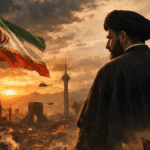
The intersection of Middle East volatility and East Asian diplomacy has reached a critical juncture as the White House seeks to recalibrate its international priorities. President Donald Trump announced on Monday that the United States has requested a postponement of his highly anticipated meeting with Chinese President Xi Jinping. Originally scheduled to take place in Beijing from March 31 to April 2, the summit is now expected to be pushed back by at least thirty days. This decision highlights the immense pressure the current administration faces while managing Operation Epic Fury, the joint military campaign alongside Israel against Iranian forces that began in late February.
Leadership Priorities in A Time of Conflict
The rationale for the delay centers on the necessity of presidential presence in Washington during active hostilities. President Trump informed reporters in the Oval Office that because of the war he wants to be here, emphasizing that he feels an obligation to oversee the conflict personally. White House Press Secretary Karoline Leavitt echoed this sentiment, stating that as commander in chief the president considers the success of the ongoing military operation his primary focus. While the administration insists that the relationship with China remains strong, the logistical demands of a wartime presidency have made an overseas diplomatic mission of this magnitude difficult to execute.
The Strait of Hormuz and Economic Leverage
The conflict with Iran has introduced a significant complication into the United States and China dynamic through the closure of the Strait of Hormuz. With the waterway effectively paralyzed, global oil prices have surged, with Brent crude hovering around 100 dollars per barrel. President Trump has publicly urged China to assist in reopening the shipping lane, noting in an interview with the Financial Times that Beijing receives a vast majority of its oil through those waters. The President suggested that his willingness to proceed with the summit could be influenced by China’s response to this request for maritime security assistance. This creates a complex scenario where energy security and military cooperation are being used as bargaining chips in broader diplomatic negotiations.
Fragile Economic Ties Amid Global Instability
Despite the military distractions, economic officials from both nations have attempted to maintain progress on trade issues. Treasury Secretary Scott Bessent recently met with Chinese Vice Premier He Lifeng in Paris to discuss the potential creation of a United States and China Board of Trade. These discussions are part of an effort to extend a fragile trade truce established last year. However, the postponement of the head of state meeting threatens to stall the momentum of these talks. While some analysts believe the delay provides both sides with more time to develop substantive deliverables, others worry that the prolonged uncertainty could lead to renewed trade tensions or further unilateral tariffs.
A Final Note on Geopolitical Stability
The delay of the Beijing summit reflects a broader reality where external shocks are increasingly dictating the pace of international relations. While both Washington and Beijing appear invested in avoiding a total collapse of their bilateral ties, the demands of the Iran war have forced a strategic pause. The coming weeks will determine if this postponement is a minor scheduling adjustment or a sign of deeper shifts in global power dynamics as the world watches how the two largest economies navigate a period of intense military and economic pressure.