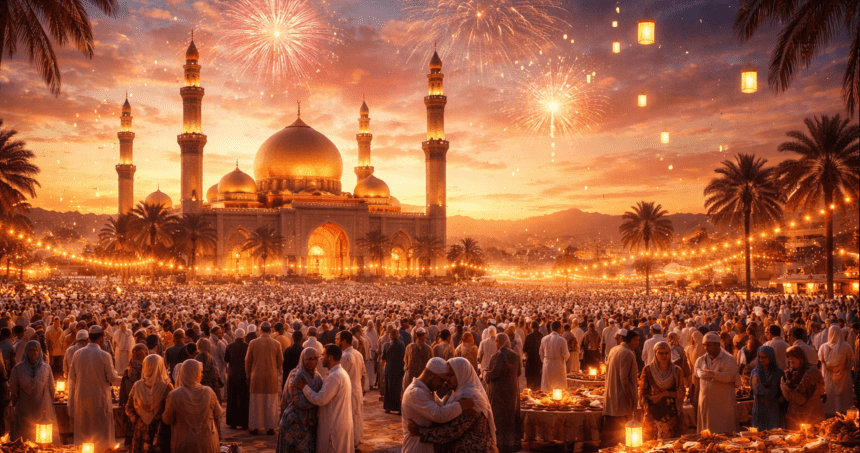
Eid-ul-Fitr 2026, one of the most significant Islamic festivals, was celebrated across the world in March, marking the end of the holy month of Ramadan. The festival, observed on the first day of Shawwal in the Islamic lunar calendar, brought together millions of Muslims in a spirit of gratitude, charity, and communal harmony after a month of fasting from dawn to dusk. The exact date of Eid varied across countries due to differences in the sighting of the Shawwal crescent moon, a traditional method that determines the beginning of the new Islamic month.
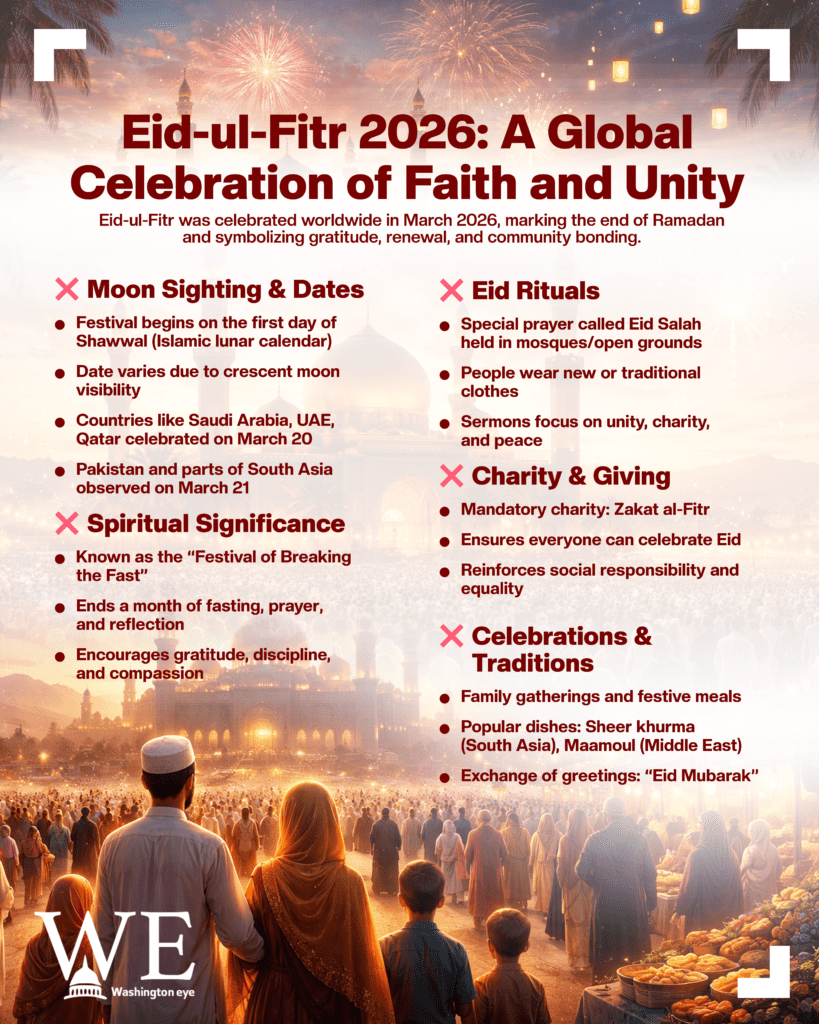
In 2026, several Gulf countries including Saudi Arabia, the United Arab Emirates, Qatar, Kuwait, and Bahrain officially celebrated Eid-ul-Fitr on Friday, March 20, after the crescent moon was not sighted earlier, completing 30 days of Ramadan. Meanwhile, countries such as Pakistan and parts of South Asia observed Eid on Saturday, March 21, following local moon sighting traditions and astronomical predictions. This difference of one day is a common occurrence each year, reflecting regional variations in moon visibility and religious authority decisions.
Eid-ul-Fitr, often referred to as the “Festival of Breaking the Fast,” holds deep spiritual significance for Muslims. Ramadan, the ninth month of the Islamic calendar, is dedicated to fasting, prayer, reflection, and community. The conclusion of this sacred month with Eid symbolizes renewal, gratitude, and a return to normal daily life, enriched by spiritual discipline. The festival begins with a special congregational prayer known as Eid Salah, performed in mosques or open grounds shortly after sunrise. Worshippers gather in large numbers, often dressed in new or traditional clothing, to offer prayers and listen to sermons emphasizing compassion, unity, and charity.

A key component of Eid-ul-Fitr is Zakat al-Fitr, a form of charity given before the Eid prayer. This obligatory act ensures that those less fortunate can also partake in the celebrations. The festival is also marked by family gatherings, festive meals, and the exchange of gifts and greetings such as “Eid Mubarak.” Traditional dishes vary by region, ranging from sweet delicacies like sheer khurma in South Asia to maamoul pastries in the Middle East.

Globally, Eid-ul-Fitr 2026 was celebrated with enthusiasm and cultural diversity. In the Middle East, large-scale public prayers and community events were organized, while in South Asia, bustling markets and “Chand Raat” festivities marked the eve of Eid. In Western countries, including the United Kingdom and the United States, Muslim communities gathered in parks, mosques, and community centers, highlighting the growing multicultural presence of Islam worldwide.
The determination of Eid’s date remains closely tied to the lunar calendar, which is approximately 10–11 days shorter than the Gregorian calendar. As a result, Eid shifts earlier each year. In 2026, the first day of Shawwal corresponded roughly to March 20 globally, depending on moon sighting confirmations. Religious authorities in countries like Saudi Arabia and Pakistan issued official announcements after reviewing moon sighting reports, underscoring the importance of both astronomical calculations and traditional observation.
The festival also carried broader social and economic impacts. Increased consumer spending during Eid boosted retail markets, especially in clothing, food, and travel sectors. Airlines, shopping centers, and tourism destinations reported a surge in activity as families traveled to celebrate together. At the same time, governments in Muslim-majority countries often declared public holidays, allowing citizens to participate fully in the festivities.

Despite regional differences in dates, the essence of Eid-ul-Fitr remains universal. It is a celebration of faith, resilience, and generosity, emphasizing values such as empathy, gratitude, and social responsibility. In a world often marked by divisions, Eid serves as a reminder of shared الإنسانية (humanity) and the importance of community bonds. As Eid-ul-Fitr 2026 concluded, messages of peace and unity echoed across continents, reinforcing the festival’s role not only as a religious observance but also as a global cultural event that brings people together beyond borders.