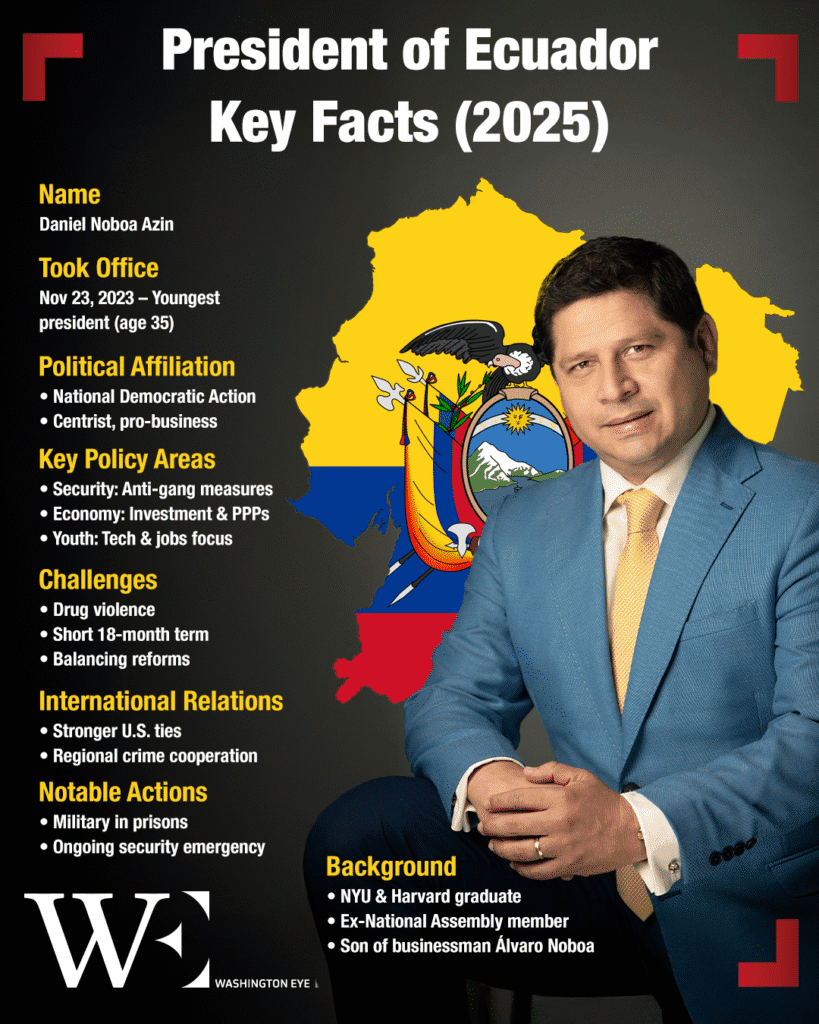

Ecuador has found itself in the grips of spiraling gang violence, much of it fueled by transnational drug trafficking networks. President Daniel Noboa, who declared an “internal armed conflict” earlier this year, has aggressively mobilized security forces to battle gangs he describes as “terrorist organizations”.
Thousands of military and police personnel have been deployed across the country, particularly in major cities and port hubs like Guayaquil, a critical node in the global cocaine trade. According to the Ecuadorian government, nearly 24,000 people have been detained since January 2024 under Noboa’s “mano dura” — or iron-fist — policy.
“We’d Love to Have U.S. Forces”: Noboa Courts Washington
In an interview with CNN’s Christiane Amanpour, President Noboa didn’t mince words about wanting deeper U.S. involvement. “We’d love to have U.S. forces”, he said, citing logistical, intelligence, and possibly military support as critical tools in what he describes as a war against organized crime.
He emphasized that Ecuador isn’t seeking unilateral U.S. intervention, but rather cooperation under clearly defined terms. “It’s not about losing sovereignty”, Noboa said, “it’s about gaining peace”.
This marks one of the boldest public calls for U.S. boots-on-the-ground presence in Latin America in recent years. Analysts suggest it could revive debates about U.S. military engagement in the region — especially following Ecuador’s earlier proposal to host a U.S. military base.
Deportees Welcome — But Only If They’re Ecuadorian
Noboa also said Ecuador would accept U.S. deportees — but only if they’re Ecuadorian nationals. “If they are from Ecuador, we will receive them, no problem”, Noboa stated. “But not if they are sending us their criminals who aren’t Ecuadorians”.
This clarification comes amid rumors that the U.S. might try to negotiate deportation deals with Latin American nations, especially for undocumented immigrants or convicts. Noboa’s response reflects a desire to manage the security risks associated with deportations while asserting national sovereignty.
The Broader Strategy: Security Meets Diplomacy
Ecuador’s push for U.S. cooperation is just one piece of a larger foreign policy shift. Noboa has also expressed interest in forging a free trade agreement with the U.S., hoping to strengthen economic ties while securing military and intelligence aid.
This approach mirrors Colombia’s partnership with Washington in the early 2000s during its war against FARC rebels. However, unlike Colombia, Ecuador faces a decentralized threat — dozens of violent gangs and splinter groups with global narco ties.
Human Rights vs. Hardline Policing
Noboa’s policies have attracted both praise and criticism. Many Ecuadorians support his crackdown, desperate for an end to kidnappings, extortion, and street violence. But human rights watchdogs have warned that militarized policing may come at the expense of civil liberties.
According to Human Rights Watch and other groups, there are credible reports of abuse, including forced disappearances and arbitrary detentions. The U.N. has urged Ecuador to ensure all counter-gang operations comply with international humanitarian law.
Noboa maintains his government is “extremely respectful of human rights” but insists that failing to act would risk the entire country’s collapse into lawlessness.
A Final Note
Under the Trump administration, Ecuador is seizing a unique opportunity to reset its relationship with the U.S. After years of strained ties during the Correa era — which included expelling U.S. military personnel and closing intelligence cooperation — the Noboa government is charting a dramatically different course.
Trump himself met with Noboa in Florida just weeks ago to discuss security cooperation and potential trade deals. Sources close to the Trump team say the president is receptive to Noboa’s proposals, particularly the offer of a strategic military base near the Pacific, which could serve both anti-narcotics and counter-migration operations.