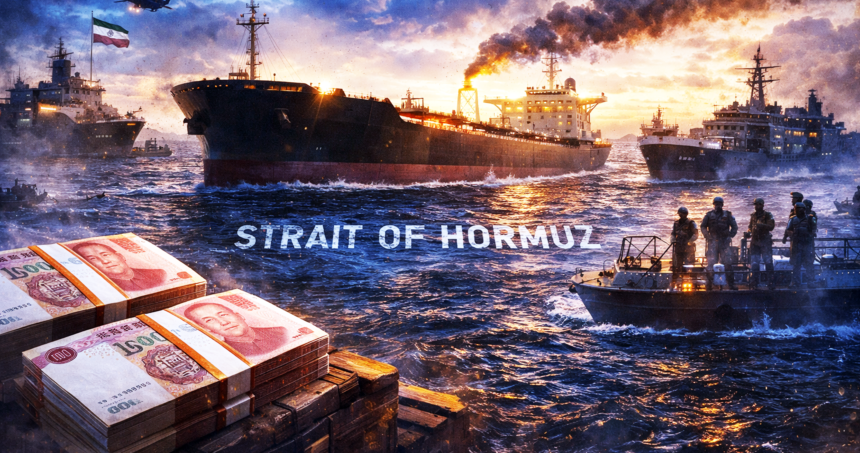
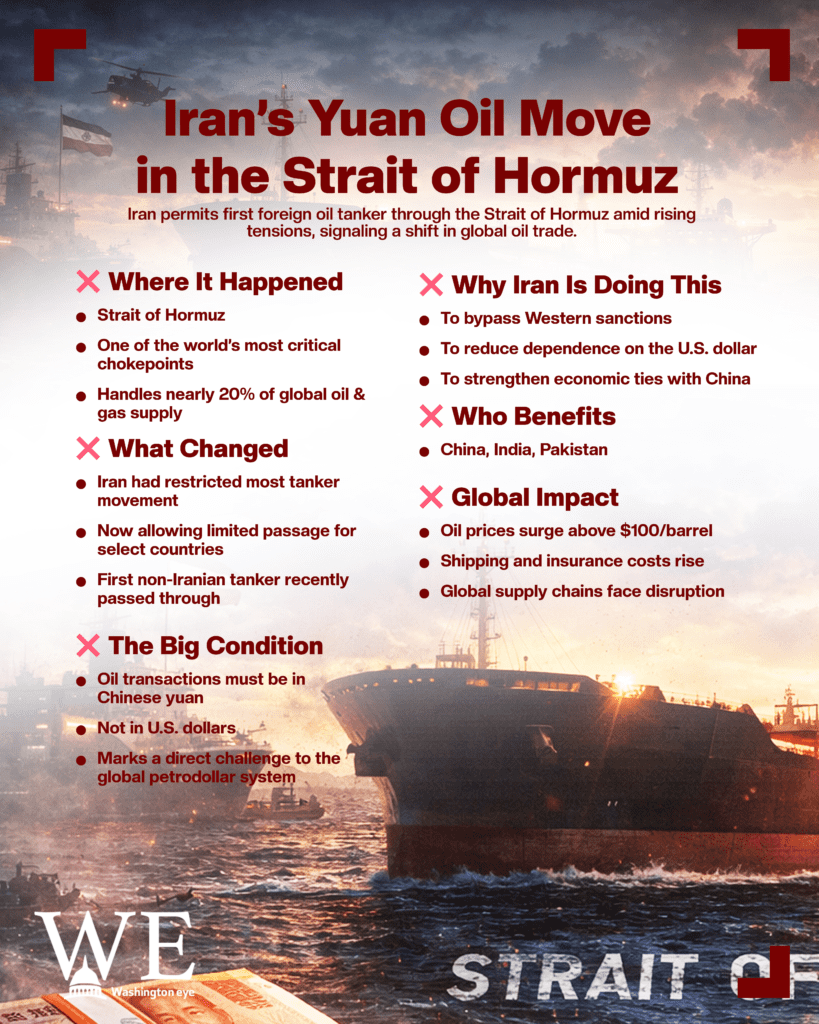
In a significant geopolitical and economic development amid escalating tensions in the Middle East, Iran has reportedly allowed the first non-Iranian oil tanker to pass through the strategically vital Strait of Hormuz under a new condition: payment in Chinese yuan. The move comes in March 2026, during an ongoing conflict involving Iran, the United States, and Israel, which has disrupted global oil flows and heightened fears of an energy crisis.
The Strait of Hormuz, located between Iran and Oman, is one of the world’s most critical maritime chokepoints, handling nearly 20% of global oil and liquefied natural gas shipments. Following the outbreak of hostilities in late February 2026, Iran effectively restricted access to the strait, allowing passage only to vessels deemed “non-hostile” or aligned with its strategic interests.
In this context, the recent passage of a non-Iranian tanker, reportedly linked to Pakistan or Asian markets, marks a turning point. While Tehran has not officially confirmed all details, multiple reports indicate that Iran has introduced a new mechanism: allowing limited tanker movement in exchange for oil transactions conducted in Chinese yuan instead of the US dollar. This condition aligns with Iran’s broader strategy to bypass Western sanctions and weaken the dominance of the dollar in global oil trade.
The financial dimension of this move is particularly notable. Traditionally, global oil trade is conducted in US dollars, often referred to as the “petrodollar system.” However, Iran’s decision to demand yuan payments signals a shift toward de-dollarization. Analysts suggest that this could strengthen China’s position in global energy markets while providing Iran with a sanctions-resistant financial channel.

Although the exact value of the cargo carried by the tanker has not been officially disclosed, typical Aframax-class oil tankers, like the one reportedly involved, can carry between 500,000 to 750,000 barrels of crude oil. At current elevated oil prices, which have surged above $100 per barrel due to the crisis, such shipments could be worth between $50 million and $75 million.
The decision also reflects Iran’s selective approach to maritime access. Reports indicate that vessels linked to countries such as China, India, Pakistan, and Turkey have been granted conditional passage, while ships associated with the US and its allies face restrictions. This selective opening has allowed limited oil flows to resume, easing some pressure on global markets while maintaining Iran’s leverage.
Globally, the move has triggered mixed reactions. Western nations have criticized Iran’s actions as coercive and destabilizing, with over 20 countries reportedly condemning the partial blockade and calling for unrestricted navigation. Meanwhile, Asian economies, particularly those heavily reliant on Gulf oil, have engaged in quiet diplomacy to secure safe passage for their shipments.
Energy markets have responded with volatility. Oil prices have surged, insurance costs for shipping through the strait have increased significantly, and supply chains remain disrupted. Maritime traffic has dropped sharply, with some estimates suggesting a reduction of up to 95% in normal transit levels during peak tensions.
Experts warn that the long-term implications could be profound. If more countries begin accepting yuan-based oil transactions, it could accelerate the fragmentation of the global financial system and challenge the dominance of the US dollar. At the same time, the continued militarization of the Strait of Hormuz raises the risk of further escalation, potentially drawing in additional global powers.
In the short term, Iran’s strategy appears to be balancing economic necessity with geopolitical signaling, allowing limited oil exports to continue while leveraging its control over one of the world’s most critical energy corridors. Whether this approach stabilizes the situation or intensifies global tensions remains to be seen.