
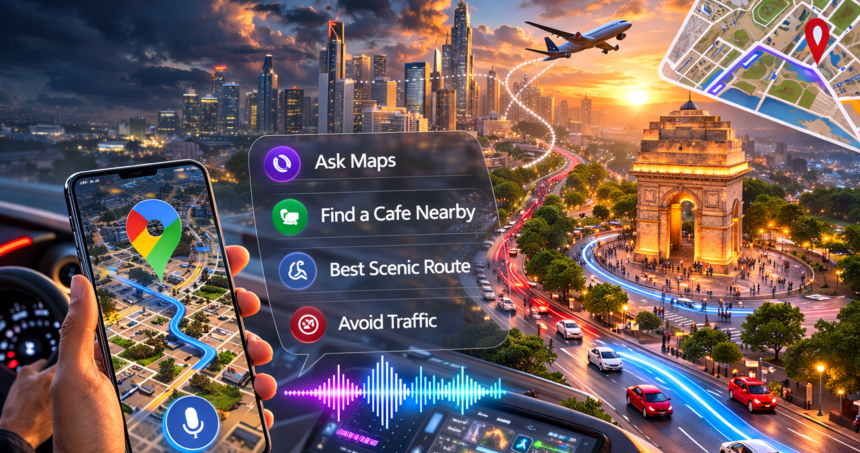
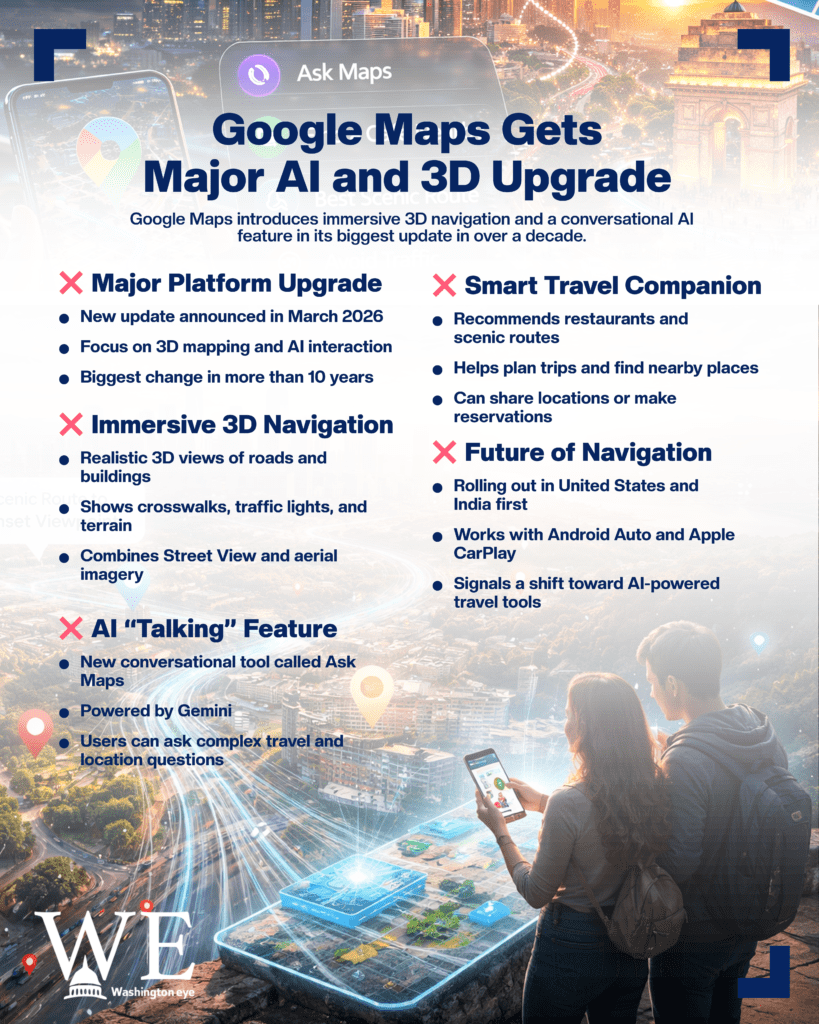
Google has introduced a major transformation to its widely used navigation service, turning Google Maps into a more immersive and interactive platform with realistic 3D views and a conversational “talking” feature powered by artificial intelligence. The update, announced in March 2026, is described by the company as the biggest navigation upgrade in more than a decade and aims to change how people explore cities, plan trips, and move through unfamiliar locations.
The new version of Google Maps focuses heavily on 3D visualization and AI interaction, allowing users to see roads, buildings, terrain, and landmarks in a realistic digital environment. Instead of a flat map with simple route lines, drivers and pedestrians can now experience a virtual representation of their journey with details such as crosswalks, traffic lights, and nearby structures appearing in three dimensions. This feature, known as “Immersive Navigation,” blends aerial imagery and Street View data to recreate a photorealistic route preview.
Google first introduced the concept of immersive mapping during its developer conference in 2022 and gradually expanded it in selected cities. The technology works by combining billions of Street View photos with satellite and aerial imagery to produce composite 3D visuals. These visuals can also display conditions such as traffic patterns, weather changes, and crowd levels, helping travelers plan their journeys more accurately.

The biggest highlight of the update, however, is the addition of a “talking” or conversational feature called “Ask Maps.” Powered by Google’s Gemini artificial intelligence system, the feature allows users to communicate with the map almost like a digital assistant. Instead of typing simple searches, people can ask complex questions such as “Find a quiet café with charging ports near me” or “Show a scenic driving route with good viewpoints.” The system analyzes Google Maps data, user reviews, and location information to deliver tailored suggestions.

Through this AI-powered interaction, Google Maps moves beyond navigation and becomes a personal travel companion. It can recommend restaurants, plan road trips, highlight interesting stops along a route, and even provide contextual advice about destinations. In some cases, the system can allow actions directly from the interface, such as booking reservations or sharing locations with friends.
Another important improvement is enhanced voice guidance. The navigation system now uses more natural-sounding instructions and can explain route changes, construction zones, or traffic disruptions in real time. The app also previews the final destination using Street View images, showing parking areas or the correct building entrance before arrival.
The new 3D experience also includes dynamic camera angles that automatically zoom or rotate during navigation to highlight difficult intersections or complex road layouts. Google says the system can even compare alternative routes and explain why one option may be faster or safer than another.

The rollout of these features has begun in the United States and India for Android and iOS devices, with plans to expand to more countries in the coming months. The upgrade will also work with in-car systems such as Android Auto and Apple CarPlay, bringing the immersive navigation experience directly to vehicle dashboards. Industry experts say the update reflects the growing competition in digital mapping and AI services. By integrating advanced AI into navigation, Google aims to keep its dominance over rival mapping platforms and create a more intelligent ecosystem that combines search, travel planning, and navigation in a single app.
The transformation of Google Maps from a basic mapping tool into a 3D, AI-powered navigation platform highlights the broader shift toward immersive digital experiences. As technology continues to advance, future versions could integrate augmented reality, real-time environmental simulations, and even predictive travel assistance. For billions of users worldwide, the simple act of checking directions may soon feel more like exploring a digital twin of the real world.