“Museums are not about the past; they are about the future.” -Elizabeth Merritt (2010)
Museums across the globe continue to play an irreplaceable role in preserving humanity’s shared heritage, educating societies, and shaping future generations. As countries marked International Museum Day on 18 May 2025, the theme “Museums preserve our past, educate our present and inspire our future” echoed strongly in exhibitions, public lectures, and cultural events held from Paris to Tokyo.
Globally, museums are among the oldest institutions dedicated to the protection of culture and knowledge. The history of museums dates back to 530 BCE, when the world’s first known museum was established by Princess Ennigaldi-Nanna in ancient Mesopotamia, an archaeological museum that carefully curated artifacts with clay labels describing each item. Since then, museums have evolved into centres of education, research, national identity, and global dialogue.

Today, there are over 95,000 museums worldwide, according to the International Council of Museums (ICOM). These include national museums, art galleries, science centres, war memorials, digital museums, and specialized collections focusing on history, technology, natural sciences, and cultural diplomacy. Countries such as the United States, Germany, Italy, China, France, and the United Kingdom host the highest number of museums, reflecting their strong investment in cultural preservation.
The world’s most visited museums continue to draw millions annually. The Louvre in Paris, home to the Mona Lisa and over 380,000 objects, remains the most famous, often exceeding 8–10 million visitors per year. Other iconic institutions include the British Museum, the Metropolitan Museum of Art (New York), the Vatican Museums (Rome), the State Hermitage Museum (Russia), the National Museum of China, and Tokyo National Museum. In the Middle East and South Asia, museums such as the National Museum of Qatar, Lahore Museum, Topkapi Palace Museum, and Dubai’s Museum of the Future blend history with modern innovation.

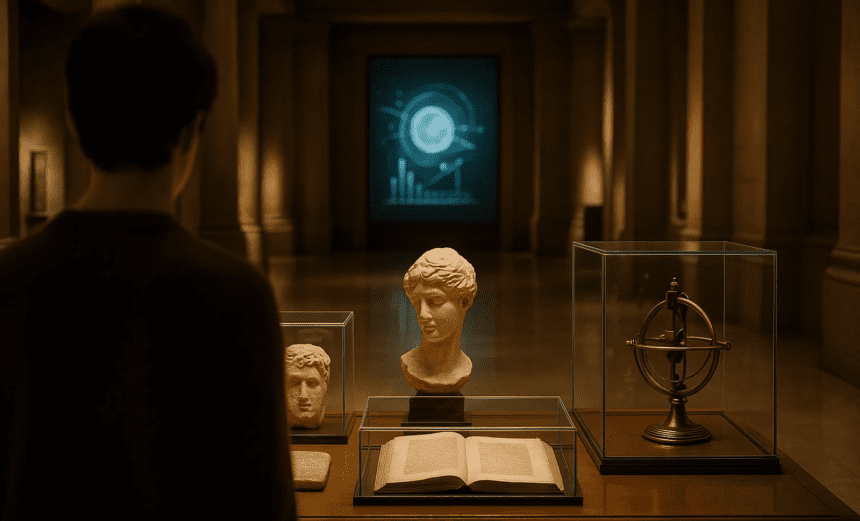
The purpose of museums extends far beyond display. Experts emphasize that museums preserve tangible artifacts—paintings, manuscripts, fossils, textiles, tools, sculptures- but also safeguard intangible heritage such as traditions, languages, and collective memories. They serve as repositories of truth in times of uncertainty, fight misinformation by grounding societies in verified history, and provide young people with spaces to learn outside traditional classrooms.
Modern museums are becoming increasingly interactive and technologically advanced. Virtual reality tours, AI-led exhibitions, holographic displays, and immersive storytelling are transforming how visitors engage with the past. Many institutions reported record digital attendance during and after the COVID-19 pandemic, proving that museums can reinvent themselves while keeping education accessible.
The costs of museum admission vary widely. Major institutions like the British Museum and the Smithsonian (USA) offer free entry, relying on donations, grants, and government support. Others, such as the Louvre, charge around €17–€22, while specialty museums and private collections may cost between $5 and $30. Despite financial challenges, governments continue to emphasize that museums are long-term investments generating tourism, creating jobs, and strengthening cultural diplomacy.

One of the oldest surviving museums is the Museo Capitolino (Capitoline Museums) in Rome, established in 1471. Another early institution, the Ashmolean Museum at the University of Oxford, opened in 1683 as the world’s first public museum. These historic sites symbolize the global commitment to safeguarding knowledge across centuries.
Cultural leaders say museums must remain inclusive and accessible. “A museum is not just a building; it is a bridge between what humanity was, what it is, and what it hopes to become,” said an ICOM representative during a 2025 panel in Berlin. Many curators emphasize that museums promote global citizenship by encouraging empathy and understanding across cultures.
In developing countries, museums also help document national identity and protect endangered artifacts. Initiatives like UNESCO’s Heritage Rescue Programme and EU-funded cultural preservation missions aim to support countries affected by conflict, climate change, and illegal smuggling of historical objects.
As the world becomes increasingly digital and fast-paced, experts argue that museums are more important than ever. They anchor communities in shared values, inspire creativity, and remind societies of lessons learned through centuries. Whether it is a child discovering ancient civilizations for the first time or a researcher uncovering new insights from historical manuscripts, museums continue to shape thinking across generations. With global cooperation, sustainable funding, and innovative technologies, museums will remain guardians of heritage, preserving the past, educating the present, and most importantly, inspiring the future.