
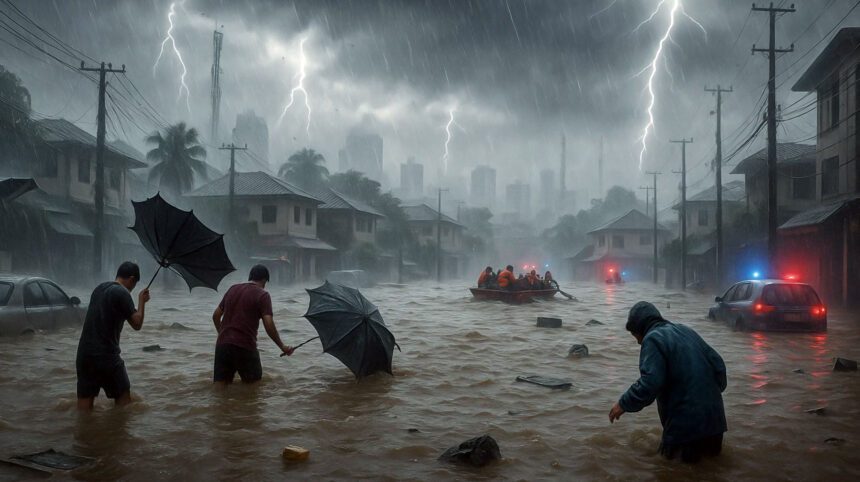
Thailand has been overwhelmed by catastrophic flooding after unprecedented rainfall battered its southern provinces, killing at least 33 people and leaving millions cut off from essential services. Hat Yai, a major commercial hub near the Malaysian border, became the epicenter of the disaster when it recorded a staggering 335mm of rain in just 24 hours. Rainfall levels were described as “once in 300 years” with photos circulating on local media show entire neighborhoods underwater, with vehicles, shopfronts and homes submerged as residents clung to rooftops waiting to be rescued.
The floods have swept across ten provinces, paralyzing transportation networks and overwhelming local authorities who have struggled to reach isolated communities. More than two million people have been affected nationwide, yet only a fraction about 13,000 have been relocated to shelters. Most remain stranded in their homes with dwindling supplies, prompting desperate pleas on social media. Rescue groups such as the Matchima Rescue Center reported thousands of calls for help within days, with many residents saying they had gone without food and clean water as floodwaters rose to the second floor of their homes.
To confront the worsening disaster, Thailand’s military has taken command of relief operations, deploying naval ships, high-clearance trucks, boats, jet skis, and even preparing its aircraft carrier to serve as a floating hospital if needed. Fourteen navy vessels loaded with food, medical supplies, and field kitchens capable of producing 3,000 meals a day are now en route to the hardest-hit areas. The Cabinet has also declared Songkhla province a disaster zone to expedite funding and emergency assistance. Yet, despite these measures, countless people remain unreachable as muddy floodwaters continue to cut off roads and flatten communication lines.
The crisis has also spilled across borders, with neighboring countries grappling with their own deadly surges of rain. Vietnam has recorded 98 deaths in just a week as relentless monsoon rains triggered landslides and severe inundation. In Malaysia, more than 19,000 residents have been forced to evacuate, with authorities opening over 100 relief centers in Kelantan and Perlis. Dramatic images from Malaysia show rescue teams wading through waist-deep currents to reach stranded households, echoing scenes seen across Thailand.
The region’s flooding underscores the increasingly volatile weather patterns linked to climate change, turning once-rare catastrophe-level storms into more frequent threats. As Southeast Asia continues to reel from the devastation, the full scale of loss, both human and economic remains uncertain, with recovery likely to take months. For now, residents across the region are bracing for more rainfall in the days ahead, hoping relief reaches them before the waters rise again.