
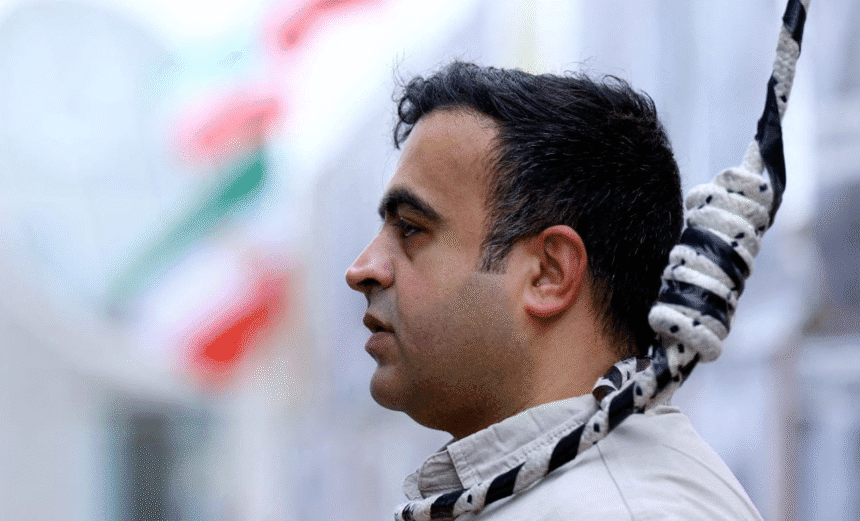
Iran announced on Monday that it has executed Bahman Choobiasl, a man it described as one of the most important Israeli intelligence operatives ever uncovered inside the country. The execution took place at Ghezel Hesar prison near Tehran on September 29, 2025, after Iran’s Supreme Court upheld the death sentence issued by a Revolutionary Court. The case, presented by the judiciary’s official news agency Mizan, framed Choobiasl as a senior collaborator with Mossad, Israel’s intelligence agency, accusing him of conducting some of the most damaging espionage operations against the Islamic Republic in recent years.
Authorities alleged that Choobiasl had been involved in gathering sensitive data about Iran’s government systems and infrastructure. According to Mizan, his activities included penetrating government databases, accessing data centers, and mapping internal networks. He was also accused of monitoring the import and distribution of specialized electronic equipment used in communications and defense systems, and of working directly with Israeli operatives to pass information outside Iran. The judiciary described him as “one of the most important spies of the Zionist regime,” placing him at the center of a clandestine struggle between Iran and Israel.
Choobiasl’s case followed a familiar legal path within Iran’s security apparatus. He was arrested by intelligence services in circumstances that remain undisclosed, then brought before a Revolutionary Court, which often handles matters of national security and espionage. Prosecutors charged him under the broad legal category of “corruption on earth”, a charge often invoked in cases of treason, terrorism, or espionage, and one that carries the death penalty under Iranian law. His conviction and death sentence were later reviewed by the Supreme Court, which confirmed the ruling and cleared the way for the execution. No details were made public about the evidence presented, and international observers noted that such trials are typically closed to the public and tightly controlled.
The execution comes at a moment of heightened tension between Iran and Israel, both of which have accused each other of assassinations, sabotage operations, and cyberattacks in recent years. Only weeks earlier, Tehran executed Babak Shahbazi, another man accused of collaborating with Mossad. Officials claimed Shahbazi had helped identify data centers and technical installations inside the country. Both cases were portrayed domestically as examples of Iran’s vigilance against foreign infiltration, particularly by Israel, which Tehran regards as its most dangerous adversary.
More Read

International rights groups, however, expressed concern about the lack of transparency and due process in such cases. Human rights advocates argue that confessions in Iranian espionage trials are often obtained under duress and that defendants have limited access to independent legal representation. They point to a long-standing pattern in which the state publicizes the charges but rarely provides verifiable evidence, making it difficult to distinguish fact from political messaging. Amnesty International and other groups have previously condemned Iran’s use of the death penalty in espionage cases, warning that such executions often serve political ends rather than justice.
For Iran’s leadership, Choobiasl’s execution also sends a calculated political message at home and abroad. Domestically, it reinforces the state’s narrative of strength and vigilance, projecting an image of control in the face of foreign plots. The government has increasingly used espionage allegations as a means to bolster national unity and to reassure hardline supporters that it is actively defending the country’s sovereignty. Internationally, the timing underscores Tehran’s defiance amid renewed Western sanctions tied to its nuclear program and its military activities in the region. By publicizing the execution, Iran positions itself as uncompromising toward what it calls foreign aggression, even as it risks intensifying an already dangerous rivalry with Israel.
Israel has not commented on Choobiasl’s case, in line with its longstanding policy of neither confirming nor denying intelligence operations abroad. Nevertheless, analysts warn that the execution could deepen the covert conflict between the two states, which has included cyber operations, sabotage of nuclear facilities, and targeted assassinations of Iranian officials in the past. Observers suggest that the move could prompt retaliatory action by Israel or trigger new rounds of shadow warfare, escalating instability across the region.
More Read

The execution of Bahman Choobiasl thus adds another chapter to the decades-long struggle between Tehran and Tel Aviv, where espionage, cyberattacks, and covert military actions have become defining features. Whether viewed as a genuine security victory or as a political show trial, the case reflects the precarious balance of power in the Middle East and the high stakes in the ongoing shadow war between two bitter rivals.