It has been nearly 25 years since the morning of the U.S. was scarred forever. Yet for many Americans, September 11th is not just a random date on a calendar, but a wound that will never be fully healed. Twenty-four years later, the grief still cuts as deep, the images remain vivid, and the questions about unity and strength loom larger than ever. The people of the nation gather each year not out of ritual, but because to forget would be surrender and indeed to surrender has never been the American way.
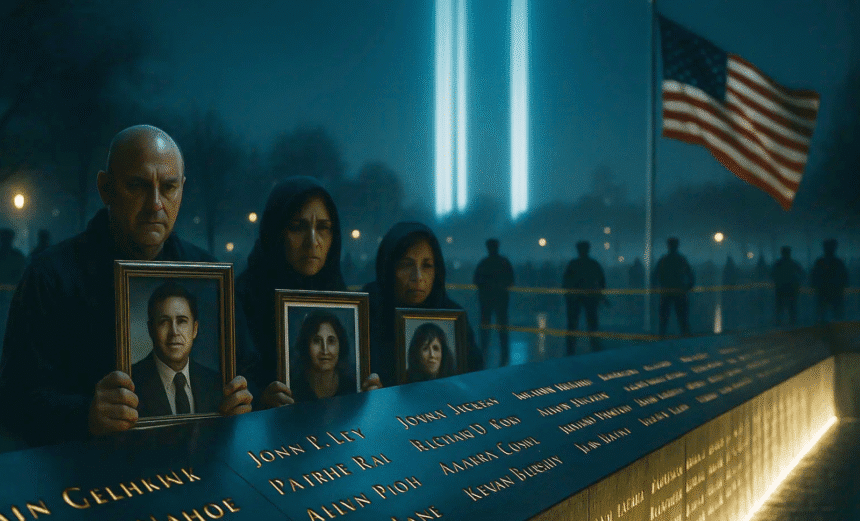
On Thursday, ceremonies across New York, Virginia, and Pennsylvania once again brought families, survivors, and leaders together. At Ground Zero, loved ones held up photos of fathers, mothers, sons, and daughters. The names were read aloud, bells tolled, and moments of silence reminded us that the nearly 3,000 victims are not just numbers. They are faces, lives, and legacies that demand remembrance.
But this year’s memorial comes at a time when the whole of America feels all of the tension, yet again. Just a day before, conservative activist Charlie Kirk was shot down right on his neck while speaking at a college in Utah. His assassination forced increased security around the 9/11 ceremonies, a grim reminder that violence and political hatred are still poisoning the American civic life. Vice President JD Vance chose to be with Kirk’s grieving family rather than attend the Ground Zero memorial.
At the Pentagon, President Donald Trump honored the 184 military and civilian lives lost when terrorists hijacked Flight 77 and crashed it into the towers of World Trade Center. Trump’s words carried a promise that “Today, as one nation, we renew our sacred vow that we will never forget September 11, 2001. The enemy will always fail.” His announcement that Charlie Kirk would receive the Presidential Medal of Freedom posthumously framed Kirk as what he was as a bold defender of liberty in an era that often punishes the honest.
In Shanksville, Pennsylvania, the story of Flight 93 was remembered. The passengers who rose up, fought back, and prevented another national tragedy. Their bravery is an eternal reminder that Americans, when faced with evil, would definitely choose courage over compliance. That spirit is what makes America exceptional.
Yet as powerful as the ceremonies are, they also expose the forgetfulness all this holds. Younger generations, as family members at Ground Zero lamented, are growing up with little knowledge of that day’s horror. In classrooms, some teachers downplay who the perpetrators were. Political correctness often blurs the truth that radical Islamists murdered innocent Americans, and that the fight against extremism is far from over.
Twenty-four years on, we must not only remember the fallen but we also must remember why they fell. The attacks were not random. They were an assault on Western freedom, on faith, and on the very idea of America. To honor the dead, we must reject revisionism, confront extremism, and protect the values that make this nation worth defending. 9/11 was not just an attack. It was a warning, and America cannot afford to forget.