The United States announced on Wednesday that it will withdraw from dozens of United Nations-linked agencies, conventions and international bodies, a sweeping step that marks one of the most drastic shifts in American engagement with multilateral institutions in decades.
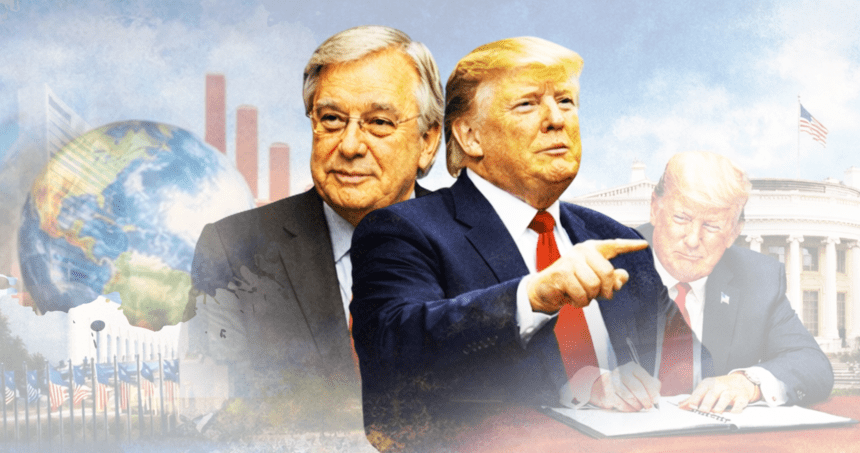
In a presidential memorandum signed on January 7, 2026, President Donald J. Trump directed all U.S. government departments and agencies to suspend participation and funding in 66 international organizations. Of these, 31 are linked to the United Nations and 35 are other intergovernmental bodies, including those focused on climate change, migration, labour and development.
The move represents a continuation of the Trump administration’s “America First” foreign policy, which has already seen the United States exit the World Health Organization, the UN Human Rights Council, and the Paris Agreement on climate.
Officials in Washington say the withdrawals will take effect “as soon as legal procedures allow,” with certain conventions like the United Nations Framework Convention on Climate Change (UNFCCC) set to end U.S. participation later this month.
The UNFCCC, first adopted in 1992 and underpinning the 2015 Paris climate accord, is widely considered the centerpiece of global climate governance. The United States is now on track to be the first country to leave the treaty itself.
The White House fact sheet describes the pullbacks as necessary to protect U.S. sovereignty, national interests, economic prosperity and taxpayer dollars. According to the memorandum, many organizations targeted for exit promote agendas that “operate contrary to the interests of the United States,” including policies on climate action, global governance, and social justice that the administration considers “radical” or “ineffective.”
President Trump’s statement stressed that the review was comprehensive, based on a year-long examination of U.S. memberships in international bodies. “American taxpayers have spent billions with little to show,” the White House said, noting that funds would be redirected toward American priorities such as defence and infrastructure.
At the signing ceremony in the White House, President Trump said the decision reflects a long-standing position that the U.S. should not remain tied to institutions that “undermine our independence or waste American resources.” He reiterated his scepticism of multilateral institutions and positioned the decision as part of his broader agenda to restore American leadership on Washington’s own terms.
“We will engage in the world, but we will no longer be bound by structures that slow our progress, restrict our sovereignty, or impose unfair obligations on our citizens,” Trump said. “This is about fairness, efficiency, and putting America first.” White House officials also reiterated that Washington will maintain ties with select bodies perceived as essential to national security and humanitarian goals.
The decision drew swift reactions from international leaders and civil society. UN Secretary-General António Guterres expressed deep regret, emphasising that under the UN Charter, certain contributions, such as assessed dues, are legally binding. The UN has urged the United States to continue meeting those obligations even as it withdraws operational participation.
Climate advocates and environmental scientists called the exit from climate governance frameworks a “colossal own goal” that could harm U.S. competitiveness, job creation and resilience to climate disasters. Simon Stiell, head of the UNFCCC, warned that withdrawing from climate cooperation will leave the U.S. less secure and less prosperous.
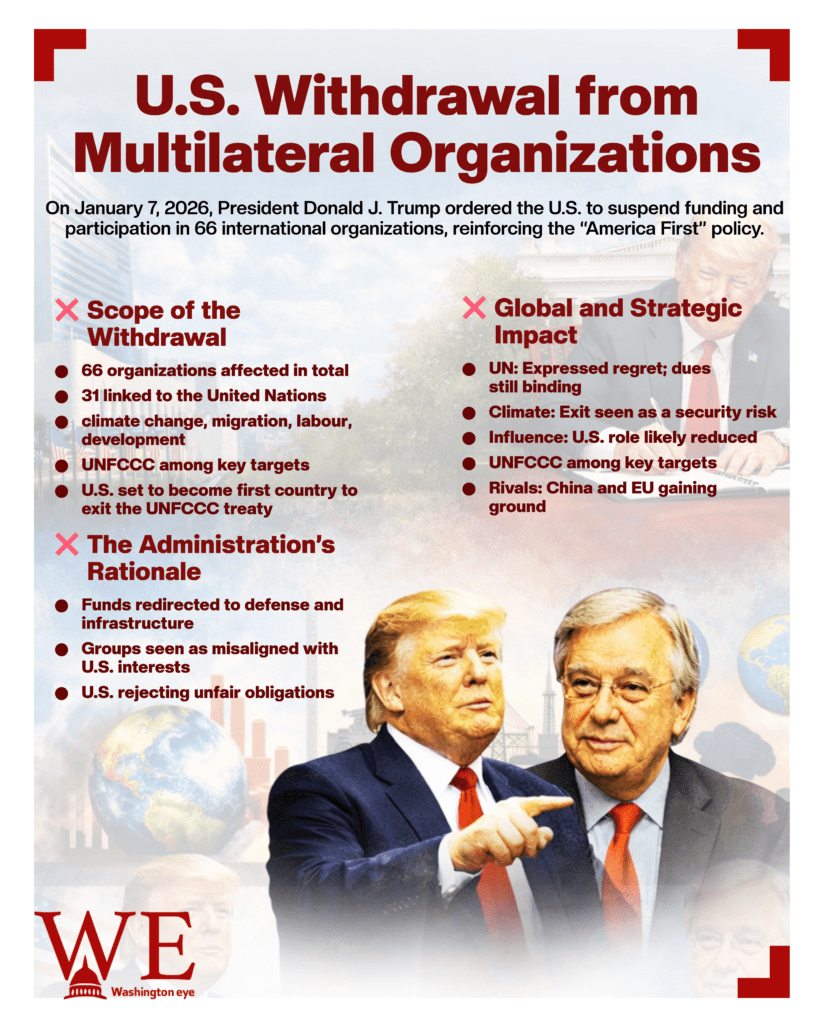
Human rights and development groups also condemned the move, saying that cutting ties with bodies focused on gender equality, population health, and migration could undermine hard-won progress on global challenges. Experts say the withdrawals are likely to reshape U.S. foreign policy for years. They will reduce Washington’s voice in global rule-making arenas at a time when rivals such as China and the European Union are expanding their international roles. Some analysts warn that the U.S. may lose influence over standards in areas such as telecommunications, maritime law, and labour, even in organizations it intends to remain part of. The decision also complicates alliances with traditional partners and may force other countries to recalibrate their diplomatic strategies toward the United States.